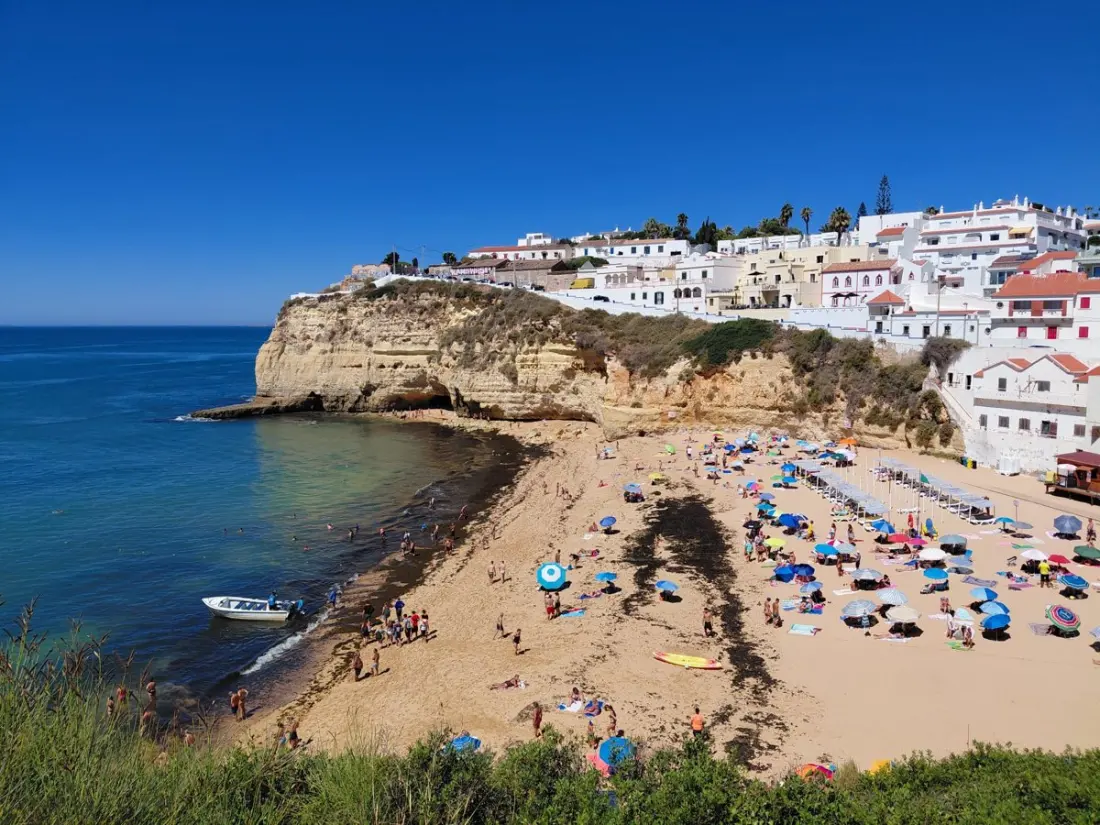
One of the Algarve's prettiest beach towns is testing a new weapon against a slimy invader. Lagoa Council ran a pilot project at Praia do Carvoeiro from September 28 to October 2, trialling a system that vacuums and collects Rugulopteryx okamurae — an aggressive invasive brown algae — directly from the water, before it ever piles up on the sand.
The shift in approach matters. Until now, the usual response has been mechanical clearance after tonnes of algae have already washed ashore, which is slow, costly and disruptive during beach season. Acting offshore could stop the worst strandings from happening at all. Lagoa's mayor, Luís Encarnação, said it was essential to act directly at sea, anticipate strandings and find productive uses for the biomass collected.
Carvoeiro has good reason to experiment. The problem escalated dramatically in September 2022, when extratropical cyclone Danielle dumped roughly 440 cubic metres of the algae onto the beach — picture a small mountain of soggy, decaying seaweed where you'd planned to put your towel. Accumulations have become a recurring nuisance along parts of the Algarve coast ever since, fouling water, smelling far from pleasant and hurting the postcard image that draws millions of visitors each year.
The trial also fits into a bigger picture. The Portuguese government approved a national action programme this month to control Rugulopteryx okamurae between 2026 and 2030. It covers monitoring and containment, mitigating impacts, exploring commercial uses for the harvested biomass, financial support for fishing and aquaculture businesses hit by the algae, and a dedicated scientific monitoring structure. Lagoa says it plans to keep collaborating with government, other municipalities, universities and businesses.
The species is originally native to the western Pacific and has spread rapidly through the Mediterranean and Atlantic, posing environmental and economic headaches for coastal communities on both fronts. For holidaymakers, the stakes are simple: cleaner water, clearer sand and a coastline that stays pleasant to swim at. If the Carvoeiro trial proves effective, similar systems could roll out to other affected beaches, meaning fewer orange-brown mats of seaweed sullying your summer swim. Anyone visiting the Algarve in late summer or autumn — when strandings tend to peak — should keep an eye on local conditions, though for now Carvoeiro remains very much open for business.
The story is a useful reminder that popular beaches are living environments facing real ecological pressure, and that the towns which depend on tourism are actively fighting to protect them. It's also a rare bit of good news on the invasive-species front: rather than just scooping up the mess, authorities are trying to stop it arriving — and possibly turn the harvested algae into something useful.