Quicksand on a riverbank, a hand-sized tarantula crossing the trail, and a thunderstorm violent enough to light up flooding desert like daylight — a thru-hiker's account of a stretch of the Continental Divide Trail through New Mexico reads less like a hiking diary and more like a week on another planet.
The latest instalment of The Trek's CDT series follows a hiker and friends moving through canyon country where water is the whole story. Riverbanks turn to quicksand after storms. Rain gathers in stone pockets under overhangs, and hikers scoop what they can. Water caches left at road intersections — one guarded by a black widow spider — can be the difference between making miles and going dry. For anyone who thinks of desert as empty, the piece argues the opposite: when rain clouds roll in, the green flares up, birds get active, and the whole mesa seems to switch on until the sun returns and it hides again.
The terrain itself is a character. Rainbow-hued sandstone bluffs a thousand feet tall, honeycomb-patterned rock, arches, caves and pinnacles. Ancient lava flats from volcanoes dead for ten thousand years feed surprisingly green growth from the black stone. There are pueblo ruins and petroglyphs older than any living thing — and, less romantically, plastic bags snagged in barbed wire that will likely outlast all of it.
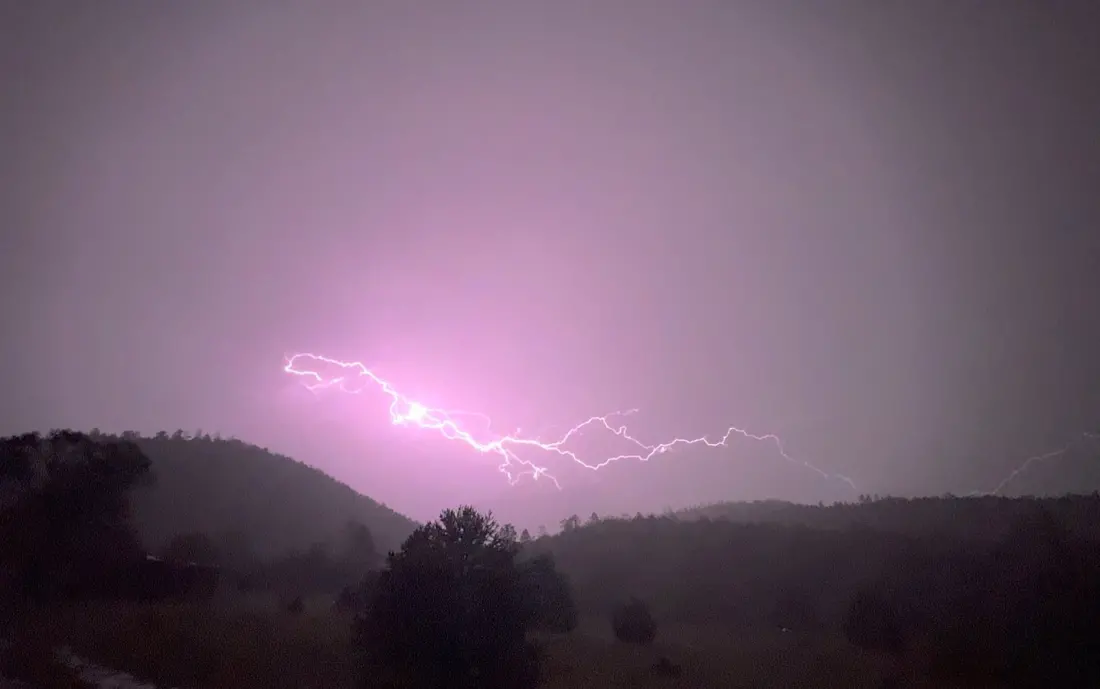
Then the weather arrives. A tree on a nearby ridge is obliterated by lightning before a stranger in a truck pulls over shouting for the hikers to take shelter. They squeeze under a tin roof seconds before a downpour hits so hard they have to shout to hear each other, feet pulled up as water streams through the awning. Post-storm hiking means mud with the consistency of peanut butter — jokes about microspikes and skis on a desert trail follow. Later, hail leaves welts on their legs.
The stretch delivers one of the trail's best-loved quirks: Pie Town, New Mexico, a genuine town named for its pies, where the crew eats a big breakfast followed by multiple slices and packs extra pie for the road. Their refuge from the worst storm is a ranch that operates as an informal hiker sanctuary — cover, power, water, a fridge stocked with Coke and fresh local eggs. The storm that night brings lightning strikes close enough to smell scorched earth, with flashes bright enough to illuminate the flooded land outside better than daylight.
Why should a traveller care? Because this is what the CDT actually looks like on the ground — unglamorous, unpredictable, occasionally hostile, and threaded through with generosity from locals and fellow hikers. The account doubles as a realistic briefing for anyone considering the trail or the region: monsoon-season storms in New Mexico are no joke, mud can stop you faster than heat, and shelter — whether a ranch bunkhouse or a tin-roofed shelter — is worth planning around. Even armchair readers get a vivid portrait of a corner of the American Southwest most itineraries skip: canyon mesas, volcanic badlands, and a town that takes its pie very seriously.