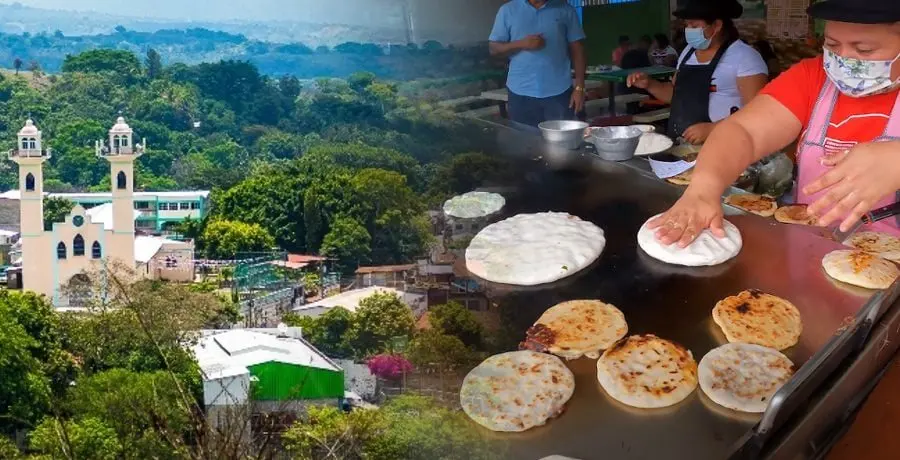
About 26 kilometres south of San Salvador, on the highway that runs to El Salvador International Airport, sits Olocuilta — a La Paz town that has quietly made itself the pupusa capital of the country. Its claim to fame is a simple twist on the national dish: instead of the usual corn masa, local cooks use rice flour, a tradition locals trace back to the 1930s when rice became a substitute for scarce or pricey corn.
The difference is noticeable on the plate. Rice flour pupusas crisp up on the griddle while staying soft inside, and they come stuffed with the classics — cheese, beans, chicharrón (pork), and loroco, an edible flower bud. As everywhere in El Salvador, they're served with curtido, the tangy fermented cabbage slaw, and a tomato sauce. Order two or three, mix the fillings, and you've had one of the country's best cheap meals.
The place to eat is the pupusódromo, a dedicated dining area where a row of vendors cook to order in front of you. It gets busiest in the evenings, when families from the capital and travellers killing time before a flight fill the tables. Because the town sits right on the airport corridor, it's a genuinely practical stop — plenty of people grab a final pupusa feast before checking in for a flight.
There's more to do than eat, though not much more, and that's part of the charm. Wander the streets around the centre, duck into the Catholic church, and browse the small shops and markets where daily life carries on regardless of visitors. If your timing is good, come in November: National Pupusa Day falls on the second Sunday of the month, and Olocuilta has marked it with community events and even novelty giant pupusas that draw crowds and media.
Pupusas here aren't a gimmick — they're the local economy. Most pupuserías are family-run, with recipes and techniques passed down through generations, and the trade supports suppliers, cooks, and surrounding businesses. That gives the town a pride you can feel when vendors talk about their filling of choice.
Who is this for? Anyone flying in or out of San Salvador International with an hour to spare, travellers doing the capital-to-coast run, and food-focused visitors who want an authentic experience without tourist pricing or queues. There are no big monuments here; the draw is sitting at a plastic table, watching dough hit the griddle, and eating something the town genuinely does better than anywhere else. Buses run along the corridor, but schedules shift, so if you're relying on public transport for an evening return, check times before you settle in for dinner.