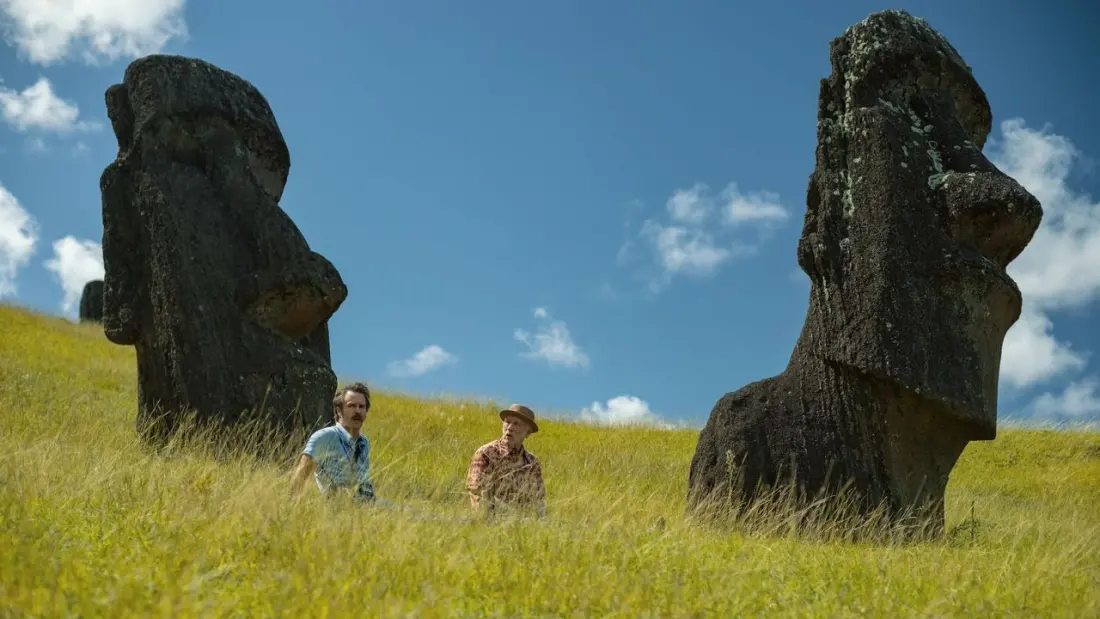
Martin McDonagh's new dark comedy Wild Horse Nine pairs Sam Rockwell and John Malkovich as a pair of CIA agents on a final holiday in Chile — and Condé Nast Traveller UK has traced the film's real route, from 1970s Santiago to the moai-studded shores of Rapa Nui. The trail is now a sellable trip, too: Abercrombie & Kent has launched a nine-day itinerary that follows the film's path, and it makes for a compelling template whether or not you book it.
The film's plot hinges on real history: the two agents have been involved in the US-backed destabilisation that preceded Chile's 1973 coup, which toppled socialist president Salvador Allende and installed General Pinochet. In Santiago, the film's Santiago scenes nod to that backdrop — one scene, filmed in an office opposite La Moneda Palace, used a room reportedly occupied by the CIA during the coup era. The palace itself was bombed during the coup, producing one of the era's defining images.
Beyond the film locations, Santiago's history stops give the trip its weight. The Salvador Allende Museum of Solidarity in Barrio República began as a left-wing exhibition space in 1971, was later used by Pinochet's intelligence agency as a detention and listening post — phone-tap transcripts were found hidden in its ceilings — and reopened as a museum after democracy returned in 1990. Out in the suburbs, Villa Grimaldi, once a notorious detention centre, is now a memorial garden of roses and mosaics, guided by survivors who say they wanted to "wash away" what happened rather than build a horror museum.
Then comes the flight itself: one daily departure from Santiago to Rapa Nui, landing at a thatched-roof airport where chickens wander near baggage claim. The film's key sites are the island's great moai platforms. Ahu Tongariki lines up 15 colossal statues with their backs to the Pacific, while Ahu Akivi's seven figures face out towards Polynesia — the ancestral homeland of the Rapa Nui people. Between the platforms, the coastal road passes wild horses, volcanic rock and guava trees, and local guides often blast Polynesian folk-country on the stereo.
Tourism here is relatively young — the first commercial flight arrived in 1967, and a previous Hollywood production in the 1990s transformed the island's economy through the jobs it created. Locals expect Wild Horse Nine to bring a similar wave. For travellers, the appeal is obvious: one of the world's most remote inhabited islands, an archaeology like nowhere else, and now a cinematic storyline stitched through it. Just do it with more curiosity than the film's protagonists, who dismiss the island's living Indigenous culture — the thing that makes the trip worthwhile in the first place.
Original reporting: Condé Nast Traveller UK