Vietnam's oldest university is now one of its most technologically ambitious tourist attractions. The Temple of Literature (Van Mieu – Quoc Tu Giam) in Hanoi, along with the Thang Long Imperial Citadel and Hoa Lo Prison, has started using digital tools to bring centuries-old history to life for visitors and school groups — and it's changing what a heritage visit looks like.
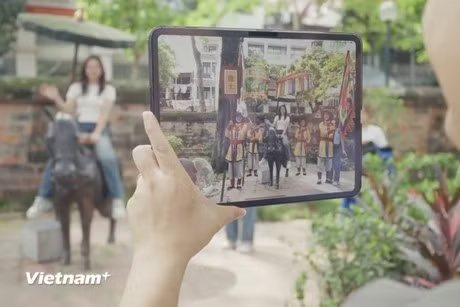
The idea is more than bolting a QR code onto a stone tablet. Sites are designing entire learning programmes that run through apps: digital maps, archives of heritage records, photo and video collections, and online Q&A platforms. On-site, visitors can hold up a phone to compare what survives today with 3D reconstructions of how a structure once looked, watch artisans explain traditional crafts on screen, or build their own story maps and presentation videos as they go.
The approach fits into a wider global push. UNESCO runs a "Culture and Digital Technologies" model, including the "Dive into Heritage" platform, which lets people explore World Heritage sites through scientific records, spatial imagery and interactive content. Vietnam's Ministry of Culture, Sports and Tourism is digitising its own records and building databases, with the stated goal of a smart, sustainable heritage-education ecosystem — one that links schools, museums, heritage sites and local communities.
Why does this matter for a traveller? Because Hanoi's big three historical sites are becoming genuinely interactive rather than look-and-leave stops. At Hoa Lo Prison, for example, a tech-assisted visit can contextualise what you're seeing with archival material and testimonies you'd otherwise miss. At the Temple of Literature, founded in 1070 as Vietnam's first national university, digital reconstructions help you picture the scholarly complex in its heyday rather than squinting at weathered stelae.
There are honest caveats. Experts cited in the report flag weak data quality and connectivity, underinvestment in technology and staff, and designs that don't always suit the material — plus unresolved questions around authenticity and cultural rights. So the experience can be uneven from site to site. Still, the direction of travel is clear: expect richer digital layers at Vietnam's heritage attractions in the coming years, and pack headphones.
For visitors who like their history hands-on, Hanoi is quietly becoming a good test case for what the next generation of museum and heritage visits might feel like everywhere.