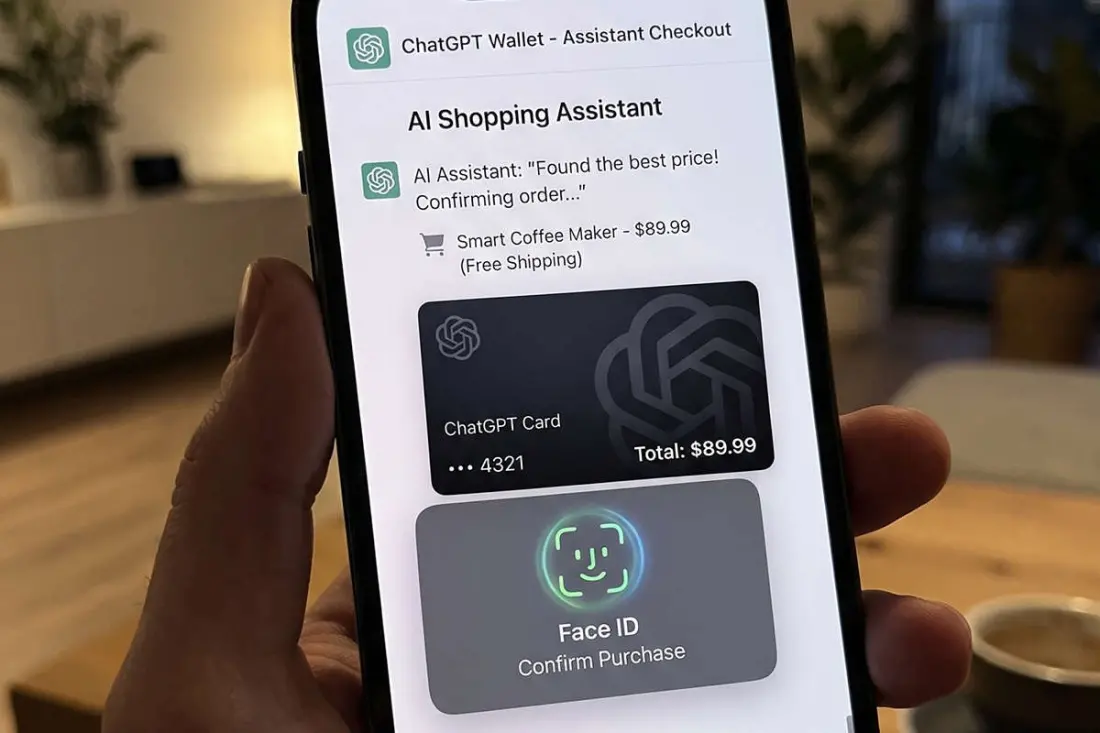
OpenAI has launched ChatGPT Wallet, a digital wallet that hands the whole shopping process to an AI agent. In practice, that means you ask ChatGPT to find something, and it browses, compares prices, places the order and checks out on the merchant's website — with you only stepping in at the end to approve the payment.
For travellers, this could reshape how trips get booked. If the agent can handle product searches and checkouts, the same flow applies to flights, hotel rooms and rental cars: describe what you want, let the agent do the legwork, then review a summary showing the merchant, the itemised list, the total and which card will be charged before anything is confirmed.
Security is the headline concern, and OpenAI has built the system around card-number protection. You add a supported card once, and from then on your real number is never used at checkout. Instead, the wallet generates a dynamic payment token — a virtual card number, expiry date and security code — for each transaction. Final sign-off requires biometric authentication: Face ID or a fingerprint scan triggers a secure payment token that completes the purchase without exposing your actual card details.
The rollout comes with heavyweight backing. OpenAI built the wallet in partnership with American Express, Chase, Mastercard and Visa, and the company says users keep their normal card benefits — reward points still accrue, and purchase protection for eligible defective goods still applies. In other words, it's designed to slot into existing credit card habits rather than replace them.
Two caveats worth knowing. First, availability: the service launches in the United States before expanding to other regions, so most readers will be waiting a while. Second, control: right now you approve each purchase individually, but OpenAI says spending limits, category restrictions and pre-authorisation settings are on the roadmap — useful if you'd let an agent handle routine bookings but want a cap on what it can spend.
Who should care? Anyone who already uses ChatGPT or similar assistants to research trips. If AI agents become a normal way to book travel, the payment layer is the piece that had to be solved first — and this is OpenAI's answer. It's also a signal to watch: the same model of delegated, tokenised payments is likely to appear inside airline sites, booking platforms and other travel apps as the big card networks push the standard. For now, the practical takeaway is simple: if you're in the US with an Amex, Chase, Mastercard or Visa card, you can try delegating your next online purchase to ChatGPT and see whether the experience feels faster than doing it yourself.