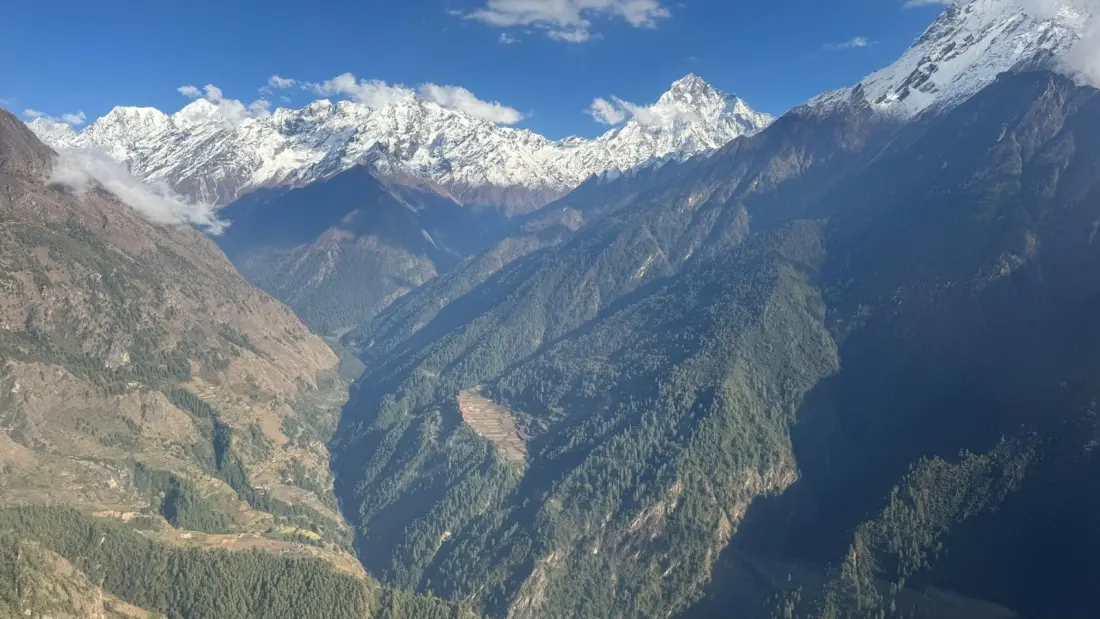
An ice-rock avalanche high on Sringi Himal (7,165m) — known locally as the holy peak Tashi Palsang — triggered a catastrophic flood down the Budi Gandaki on 11 October, severing the Tsum Valley and the Manaslu Trail from the outside world for over a month.
The avalanche sent a slurry surge several hundred metres high down the Ungiling River, damming the Syar Gorge. When the impounded lake burst in stages, successive waves of black mud — locals call the debris 'peru' (rotten slate) and 'yeru' (black sand) — ground 90km downstream to Benighat, where the Budi Gandaki meets the Trisuli. Bridges, roads and hydropower plants were swept away, and flood scars still sit up to 800m above the river bed.
For trekkers and locals alike the impact has been severe. Stranded visitors were evacuated by helicopter, and the valley — a side route off the Manaslu Circuit — has earned no tourism income since mid-October. Residents have relied on relief flights for food and basics because even foot trails were destroyed. One resident, Chhiring Sangmo, spent more than a month stuck in Chumling before hitching a ride back to Kathmandu by relief helicopter.
The human toll, though far smaller than the August Langtang Lirung avalanche disaster that killed thousands, was still heartbreaking: five herders died, including Mingmar Dolma's husband, alongside their cattle, sheep and dzo. High pastures, terrace farms, sheds and forests were destroyed. Villages like Chumchet and Chumling narrowly escaped.
Why the difference between the two disasters? The October avalanche volume was smaller, the mud moved slower, early warnings reached downstream villages in time, and the Budi Gandaki is less developed than the busy Trisuli corridor. It's a sobering reminder for anyone trekking in Nepal's high valleys that glacial and avalanche hazards are real, and that routes through remote Himalayan gorges can close with little warning — travel insurance with helicopter evacuation cover, flexible itineraries and a guide who monitors local conditions are not optional extras here.
For trekkers eyeing the Manaslu region, the takeaway is to check current trail status before booking. Reopening timelines for the Budi Gandaki route remain uncertain, and rebuilding bridges and paths in such terrain takes time. Alternative Annapurna-area routes may be safer options until the valley recovers, and when it does return, hiring local guides and teahouses there will matter more than ever to a community that has lost a full season of income.