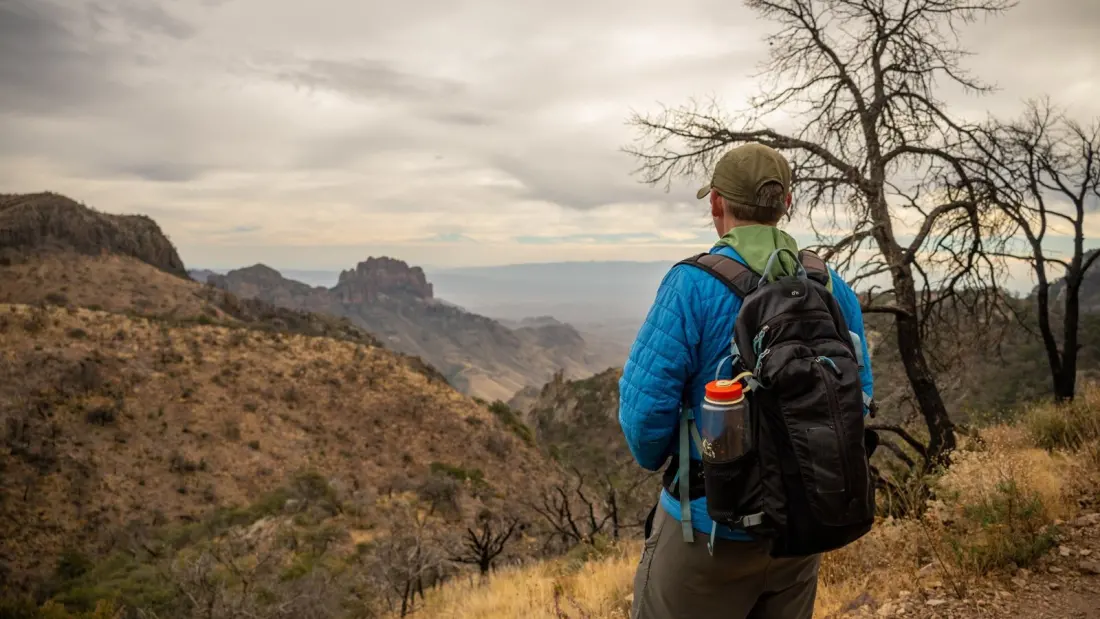
Big Bend National Park in West Texas covers more ground than Rhode Island, and it packs in some of the state's best terrain: 1,500-foot limestone canyon walls on the Rio Grande, rocky desert flats, and the forested Chisos Mountains rising out of it all. Right now, though, the park's scenery is under real pressure. In early November, the US Supreme Court voted 8-1 to allow border wall construction to resume inside Big Bend, with plans for vehicle barriers, surveillance infrastructure and cleared patrol roads around Santa Elena Canyon. Conservation groups and Texas officials are still fighting it, but the practical takeaway for travellers is simple: if this park is on your list, don't wait years to go.
The flagship hike is Emory Peak, the highest point in the park and the Chisos range at 7,825 feet. It's a proper day's work: 9.7 miles round trip with about 2,352 feet of climbing, taking most people 6 to 8 hours. The route starts at the Chisos Basin Visitors Center, joins the Pinnacles Trail, and climbs through oak, piñon and juniper forest on singletrack and rock stairs. After a saddle below the summit, a short but exposed 30-foot scramble gets you to the top for full 360-degree views over the desert. If you'd rather split the effort, you can reserve one of the Pinnacles campsites in advance and turn it into an overnight.
November is prime time — summer heat in this part of Texas is brutal, and cooler months make the climb far more pleasant. One critical detail: there is no water anywhere on the trail. The National Park Service recommends carrying at least a litre per person per hour, which for a full day out means planning for several litres each.
Pair the hike with the park's other highlights, with a caveat. Santa Elena Canyon has a picnic area that makes a great post-hike dinner spot, and the park's riverside hot springs are free — but recent flood damage has complicated access. The paved road between Cottonwood Campground and Santa Elena is closed at the time of writing; only high-clearance, true 4WD vehicles can reach the canyon via Old Maverick Road. The hot springs now require a flat 4-mile round-trip walk along a gravel road.
Wildlife and plants are half the reason to come. Hikers spot javelinas rooting in the undergrowth and ringtails — nocturnal, raccoon-like climbers — on the Chisos cliffs, while prickly pear cactus and the spiky, sculptural ocotillo cover the desert flats. It's a rare place where a serious mountain hike and an international border river sit in the same day's itinerary.
Who is this for? Self-sufficient hikers comfortable with long, dry, exposed routes and rough access roads. If that's you, Big Bend rewards the effort with solitude and drama you won't find in the busier western parks — and the landscape along the border may not look the same for long.