Electric cars feel like a 21st-century story, but one of the world's first proper electric automobiles rolled through the streets of Coburg, a small Bavarian town, back in autumn 1888. It was called the Flocken Elektrowagen, and its maker was an engineer most people have never heard of.
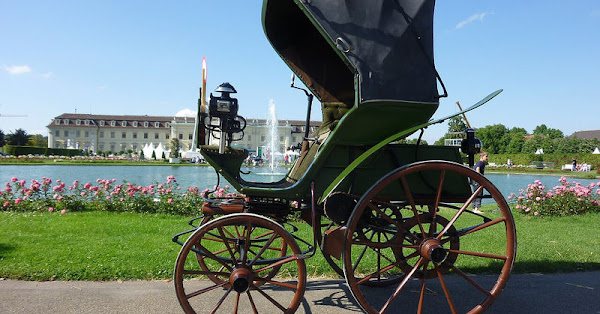
Andreas Flocken, born in Thuringia in 1845, ran a machinery business in Coburg that built agricultural equipment. By the late 1880s he had set up an electrical engineering department within the firm, and that same year he built his first electric vehicle. It looked like a horseless carriage — wooden body, four large wheels with pneumatic tires — but underneath it was genuinely forward-thinking. The battery sat above the front axle, power reached the rear axle via leather belts, and the car even had electric headlights, a real rarity at the time.
The numbers are charmingly modest: roughly 400 kilograms in weight, an electric motor producing about 0.9 kilowatts, and a top speed of around 15 kilometres per hour. Still, compared with the alternatives, electricity had clear appeal. Steam cars needed a boiler heated before you could go anywhere, and early petrol cars were noisy, smelly and vibrating. The Flocken's big weakness was the same one that limits some drivers' patience today — heavy batteries with limited range.
History is a bit more complicated than calling it the first electric car, though. Experimenters had played with electric propulsion since the 1830s — Scottish inventor Robert Anderson built a carriage on non-rechargeable cells — and in 1881 Frenchman Gustave Trouvé drove a motorised electric tricycle. What makes Flocken's machine significant is that it's recognised as one of the earliest genuine four-wheeled electric automobiles. Rechargeable lead-acid batteries, developed in the 1850s, were what finally made such vehicles practical.
Flocken kept building electric vehicles until 1903, when the company abandoned car production. By then the internal combustion engine was winning decisively. Andreas Flocken died in 1913 without ever reaching the fame of Karl Benz, Gottlieb Daimler or Henry Ford, largely because his vehicles never became a mass-manufacturing business and documentation of his work is thin. But a modern replica of the Elektrowagen exists, and Coburg has every reason to claim its place in motoring history.
For travellers, this is a good reminder that small German towns often hide outsized chapters of industrial history. Coburg is best known for its mighty Veste Coburg fortress and its links to European royalty, but car history fans can add this one to the list — an earlyEV pioneer more than a century before it was fashionable. The original reporting comes from Amusing Planet.