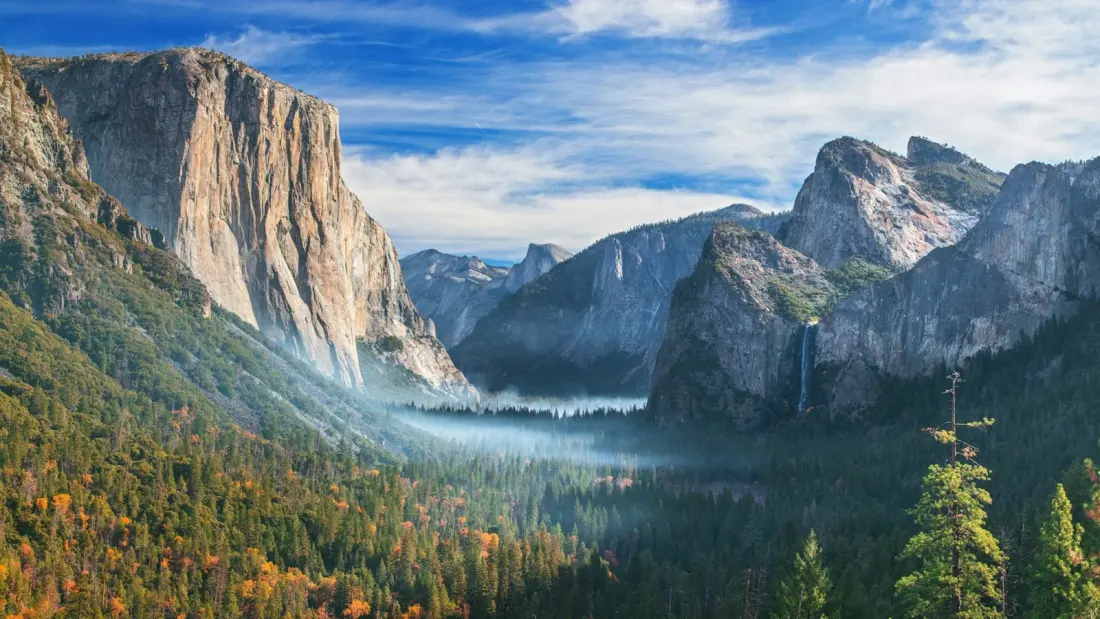
Yosemite National Park is about to get a new shape — at least on paper. On November 18, Congress passed the Ackerson Meadow Land Interchange Act, a bipartisan bill that redraws the park's boundary in the Sierra Nevada through a 330-acre swap between two federal agencies. It now awaits President Trump's signature, though the timing of that is unclear.
The mechanics are straightforward: 160 acres of Stanislaus National Forest land will move into National Park Service hands and become part of Yosemite, while 170 acres of current park land shift the other way to the US Forest Service for management under Stanislaus. The bill was co-sponsored by California Democratic Senator Alex Padilla and Republican Representative Tom McClintock — an unusual show of cross-party agreement on public land at a moment when land swaps have been controversial. Recent months saw an August report alleging a proposed Yosemite exchange involving a private road and a Nevada real estate company, plus Major League Baseball floating a game at Grand Teton.
The backstory goes back to 2016, when the Trust for Public Land purchased a 400-acre parcel at Ackerson Meadow and donated it to Yosemite. The trouble was geography: the gift sat almost entirely inside Stanislaus National Forest, with barely any border touching the park itself. That left the classic Western 'checkerboard' problem, where a conservation priority is managed by one agency while the land around it belongs to another.
Padilla framed the fix in conservation terms, calling Ackerson Meadow one of California's most critical wildlife corridors and arguing the exchange will protect endangered species, reduce wildfire risk and support rural economies. McClintock's argument was more practical: the Forest Service allows livestock grazing on its land, while the Park Service largely restricts it inside parks, so a tidy boundary means ranchers finally know whose rules apply, where permits run, and who maintains infrastructure.
For visitors, expect the practical changes to be subtle. The meadow area sits on Yosemite's western edge near the Big Oak Flat entrance corridor, and the swap mostly resolves behind-the-scenes management questions rather than altering trails, roads or access. But it does matter: cleaner boundaries typically mean better-coordinated fire management in a region where wildfire is the dominant threat, and stronger habitat protection in a corridor wildlife depends on. If you hike or drive the western approaches to the park, some signs and jurisdiction lines may eventually move eastward as the deal takes effect.