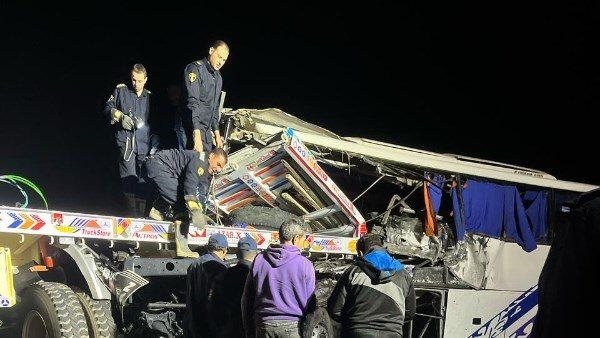
A microbus and a truck collided on Tuesday, 24 November, on the desert highway linking Aswan with the temples of Abu Simbel, one of Egypt's most-visited ancient sites. Ten people died and nine were injured, according to local officials. The crash happened at kilometre 110 of the Aswan–Abu Simbel road, and Aswan's ambulance service rushed multiple crews to the scene. The injured, including a six-year-old boy with a head wound and one man who arrived at hospital in a coma, were taken to Aswan Specialised Hospital. No cause has been announced.
The victims were all men aged between 25 and 52, and they came from a wide spread of the country — Qalyubia and Beheira in the Nile Delta, and Nasr El-Nuba just outside Aswan. Aswan Governor Amr Lashin ordered officials to respond to the incident, though the source report was truncated before further details.
This stretch of road is the standard route for travellers heading from Aswan to Abu Simbel, where Ramses II's colossal rock-cut temples stand near the Sudanese border. Most visitors make the roughly three-hour drive in convoy-style day trips, by coach, minibus or organised transfer, and the route has a long record of serious accidents. Speeding, fatigue and heavy truck traffic on isolated desert stretches are recurring factors in crashes in the area.
The collision also lands against a grim statistical backdrop. Egypt's road deaths climbed 10.8 percent in 2025, reaching 5,829 fatalities, according to the Central Agency for Public Mobilization and Statistics (CAPMAS). That reversal comes after years in which the government had claimed steady improvements in road safety following major infrastructure upgrades.
For anyone planning a trip to Abu Simbel, the takeaway is practical rather than alarmist. The temples remain a highlight of any Egypt itinerary, but the choice of how you get there matters. Flying into Abu Simbel's small airport from Aswan or Cairo skips the road entirely. If you do go overland, book a licensed, air-conditioned coach or a reputable operator rather than an informal microbus, travel during daylight, and avoid squeezing the drive into pre-dawn hours when visibility is poor and drivers may be tired. Groups travelling in convoy with police escort — a system sometimes used on this route — add another layer of oversight.
The story matters to travellers for one more reason: it shows how Egypt's wider road-safety picture is deteriorating, which is worth factoring into any itinerary that involves long intercity drives, whether to Luxor, the Red Sea coast or the Western Desert oases. Insurance, operator vetting and sensible scheduling aren't box-ticking exercises on these routes.