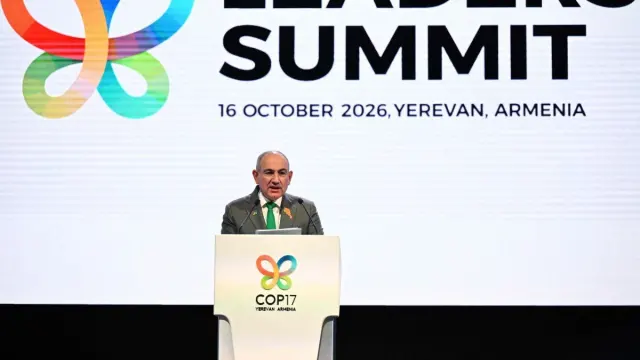
From 9-20 November, more than 190 countries descend on Antalya, Türkiye, for COP31 — and the agenda reads like a wishlist from the Pacific. Climate finance, adaptation funding and the mechanics of a 'just transition' away from fossil fuels top the bill, all against a sobering backdrop: the world is on course to temporarily overshoot the 1.5°C warming threshold set by the Paris Agreement.
Türkiye hosts and presides over the summit, but Australia will steer the negotiations in close cooperation with Pacific Island countries — a pairing that matters for anyone who cares about the region's future. For low-lying nations like Fiji and Vanuatu, the talks are not abstract. Fiji's PM Sitiveni Rabuka told parliament this week that his government has deployed 67 water trucks and moved over 1.69 million litres of water by road and sea as an El Niño-driven drought bites across communities. He used the moment to repeat Fiji's call for richer economies to step up with climate financing that doesn't saddle small states with more debt.
UN climate adviser Selwin Hart, speaking ahead of the summit, framed the problem bluntly: the technology exists — electric vehicles hit one in four new car sales globally in 2025, solar additions topped 600 gigawatts, and battery storage capacity is now 11 times its 2021 level — but money isn't reaching the places that need it. Emerging and developing economies outside China, home to nearly two-thirds of humanity, took in just 18 percent of global clean energy investment last year. Cost of capital, Hart noted, can be several times higher for renewables projects in poorer countries.
Negotiators in Antalya will also work out how the just transition mechanism — agreed in principle last year to protect workers and communities as economies decarbonise — actually functions, and how progress on adaptation gets measured and funded for vulnerable states. The summit launches the second global stocktake, the Paris Agreement's formal health check on collective progress.
Why should a traveller care? Because the Pacific is one of the world's great holiday frontiers — think Fiji's reefs, Vanuatu's volcanoes, snorkelling, surfing and island culture — and its viability depends on decisions made in rooms like these. Rising seas, coastal erosion and drought are already reshaping destinations. Hart's message was one of urgency rather than surrender: overshoot of 1.5°C should push harder action, not resignation. Whether COP31 delivers the money and mechanisms Pacific nations need will shape not just climate politics, but the practical future of travel across the region.
Story via Islands Business (PACNEWS).