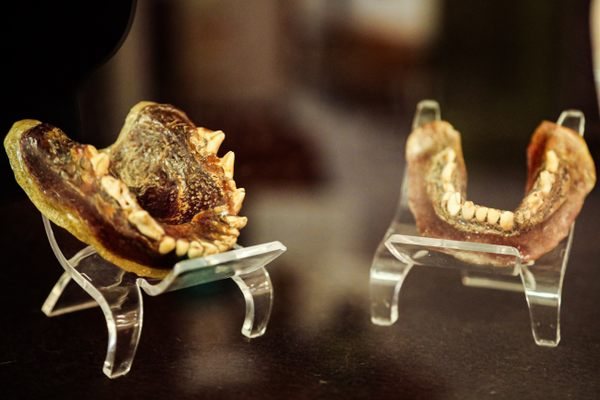
Highway 395 cuts through California's Owens Valley, and most drivers blow straight past the little town of Independence. That's a mistake, because less than a mile off the road sits the Eastern California Museum — home to what might be the strangest dental artefact in America.
The story goes like this: a century ago, George Washington Hancock, a resident of rural Independence, was losing his teeth and couldn't afford a dentist. His solution? He melted down resin toothbrush handles, sourced teeth from the local coyote population, and built himself a full set of prosthetic chompers. He wore them for years. In 1946, a dentist named Dr. Douglas Dyer arrived in town, heard the tale, and struck a deal — a proper set of dentures in exchange for the coyote-tooth original. Dyer's widow Florence later donated the dentures to the museum, where they remain on display. No photos survive of George wearing them, which is probably for the best.
The dentures are the headline act, but the museum has more depth than its small size suggests. Its grounds hold historical buildings, old mining equipment, a native plants walk, and a working narrow-gauge steam locomotive — the Southern Pacific 18. Inside, there's a strong collection of Paiute and Timbisha basketry and artefacts, plus photography by Edward S. Curtis, famous for his images of Native American life. Staff will happily fire up an 1897-era Regina music box — an 1896 model, to be precise — if you ask.
One of the most significant collections here relates to Manzanar, the WWII concentration camp where American citizens of Japanese ancestry were held from 1942 to 1945, just down the road. The museum preserves photographs and personal belongings from camp internees, including the original pitcher's plate from the baseball field where prisoners organised games to pass the time. It's a sobering, important piece of American history kept with real care.
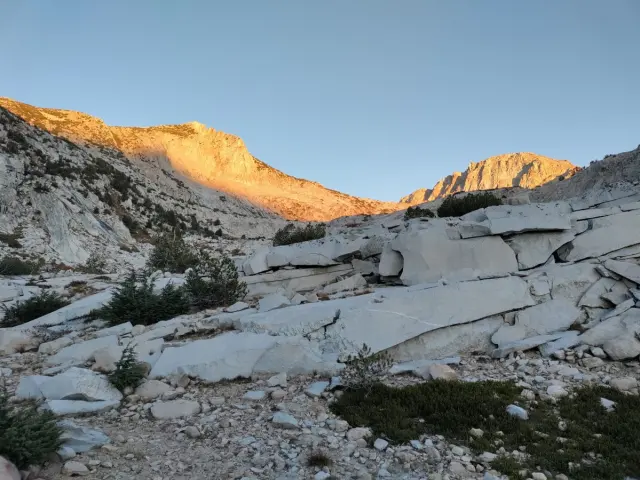
For road-trippers running the Eastern Sierra route between Los Angeles and Mammoth or Bishop, Independence makes an easy, worthwhile stop. Entry is cheap, the museum is open Tuesdays through Sundays from 10 am to 5 pm, and you can walk the whole thing in an hour or linger longer. Pair it with a visit to the Manzanar National Historic Site a few miles south and you've got a genuinely memorable detour — one part oddity, one part history, all set against a backdrop of the dramatic Sierra Nevada escarpment. Bring a camera, leave the coyote teeth at home.