Croatia has become the number one destination for people formally leaving Bosnia and Herzegovina, new official data shows, pulling ahead of long-standing favourites Austria and Slovenia.
Between January and October 2026, 1,680 people deregistered their residence in Bosnia and Herzegovina, according to the country's Agency for Identification Documents, Registers and Data Exchange (IDDEEA). Of those, 531 — almost one in three — declared Croatia as their destination. Austria came second with 400 departures, Slovenia followed with 324, and Serbia received 246. Smaller flows went to Montenegro (90), Germany (31) and the Netherlands (20), with the remainder scattered across roughly ten other countries that each recorded fewer than ten moves.
The timing of the moves is also telling: the spring months saw the highest number of relocations from Bosnia to Croatia. The gender split is fairly even, with men making up 55% of all departures and women 45%.
IDDEEA was blunt about what the numbers mean. The agency described the trend as concerning, noting that each figure represents a person, a family and a decision to build a future elsewhere rather than at home.
The data lands against a backdrop of long-term demographic decline. Bosnia and Herzegovina's last census, held in 2013, counted just over 3.5 million residents, and no new census has taken place since, largely because of political disagreement. The Agency for Statistics estimated the population at just under 3.4 million at the start of 2026, but patchy emigration records make the real figure hard to pin down. UN-based estimates published by Worldometer put the 2026 population at roughly 3.1 million, with further decline projected.
For a neighbouring country like Croatia, the pattern has two sides. It reinforces Croatia's pull within the region — its EU membership, shared language and geographic proximity make it the most natural first stop for Bosnians moving abroad, whether for work, family or simply an easier administrative path. But it also feeds an ongoing regional story of shrinking populations in the western Balkans, one that affects everything from labour markets to how lively smaller towns feel on the ground.
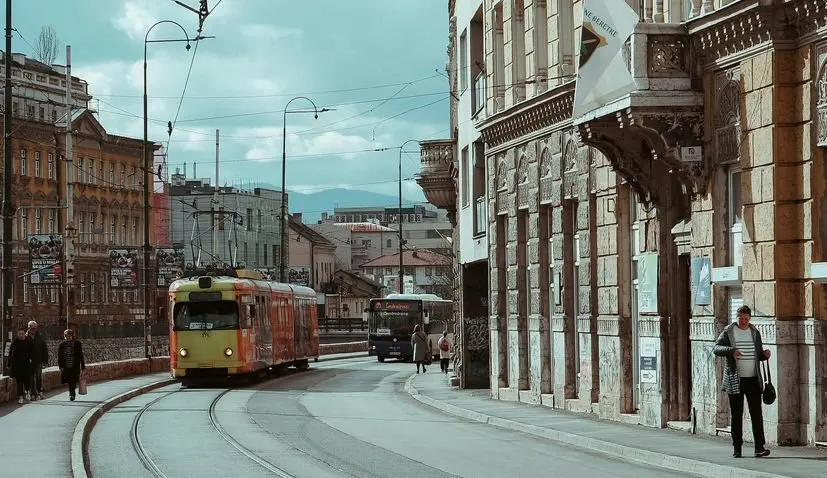
For travellers, the context is worth knowing even if it never shows up in a brochure. Bosnia and Herzegovina remains one of Europe's most affordable and rewarding places to visit — Sarajevo's Ottoman-era old town, Mostar's rebuilt bridge and the untouristy riverside towns along the Neretva all punch well above their weight. Croatia's Dalmatian coast, meanwhile, absorbs far more seasonal visitors than its northern neighbour, which is part of why the two countries feel so different to travel through despite their shared history.
The headline numbers are about people moving, not people holidaying. But if you want to understand the Balkans as they actually are in 2026 — and why routes between Zagreb, Split, Sarajevo and Mostar carry so much cross-border traffic — this quiet shift in official departure registers is a good place to start.
Croatia Week