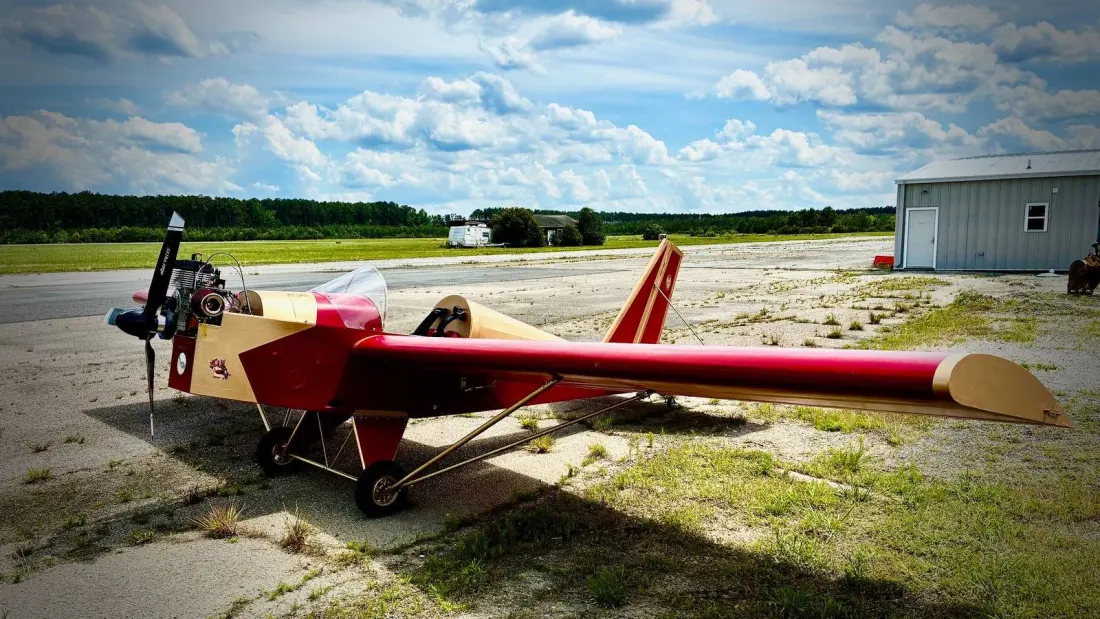
You don't need a pilot licence, an aircraft registration, or even six figures to own and fly a powered aeroplane in the United States. Ultralights — the tiny single-seat aircraft governed by FAA Part 103 — start at just under $11,000 for a kit and top out in the mid-$30,000s fully assembled, making them by far the cheapest door into aviation.
The rules explain the prices. Part 103, adopted in 1982, caps ultralights at 254 lb empty weight, 5 gallons of fuel, 55 knots at full power and a 24-knot stall speed. In exchange for staying within those limits, no pilot certificate, medical, registration or airworthiness certificate is required. Because manufacturers avoid the cost of FAA certification, small companies can sell kits and finished aircraft at prices a certificated Cessna 172 — reported at $369,000 base in 2017 — will never approach.
But the sticker price is only the start. Mini-Max's 1103R kit lists at $10,899.99, yet the company estimates a finished, flying aircraft at $22,499.99 once engine, prop, instruments and paint are added. Quick-build options cut workshop hours instead: Badland's F2 quick-build costs $18,531 with about 250 hours of work, versus roughly 375 hours for its cheaper F1 builder kit. If you'd rather skip the garage entirely, ready-to-fly aircraft cover every budget. North Wing's SkyMax nanolight trike starts at $10,990, while U-Fly-It's popular Aerolite 103 runs $29,354 to $36,573 depending on engine — a dealer will even assemble it for you for $4,000.
The used market is cheaper still. Barnstormers classifieds in October listed complete ultralights from about $6,500 (a Lazair II twin) to $32,000 (a Kolb FireFly), with unfinished projects under $3,000. Caveats apply: with no inspection programme, a used ultralight is only as trustworthy as its records, and many older machines run on Rotax 447 and 503 two-stroke engines that are no longer made — Phantom Aeronautics now recommends Hirth engines instead, so a buyer may face a full engine swap down the line.
Running costs stay gentle thanks to the 5-gallon tank. A Rotax 447 burns roughly 3 gallons per hour, giving about 100 minutes of flying per fill. No training is legally required, though EAA strongly recommends dual instruction before going solo, and some sellers bundle lessons — one Aerolite 103 listing included 10 hours of flight training.
Why should a traveller care? Ultralights open up a different kind of holiday — flying over farmland or a coastline from a grass strip, entirely under your own wing, with daylight, VFR-only restrictions keeping things simple. They also now sit at the bottom of a newly expanded ladder: the FAA's MOSAIC rule, phased in through October 2025 and July 2026, lets sport pilots fly aircraft as capable as a Cessna 172 with one passenger, giving ultralight owners a natural upgrade path. For anyone who has priced out a private pilot licence and balked, Part 103 remains the lowest-cost, lowest-paperwork way to get airborne. — Simple Flying