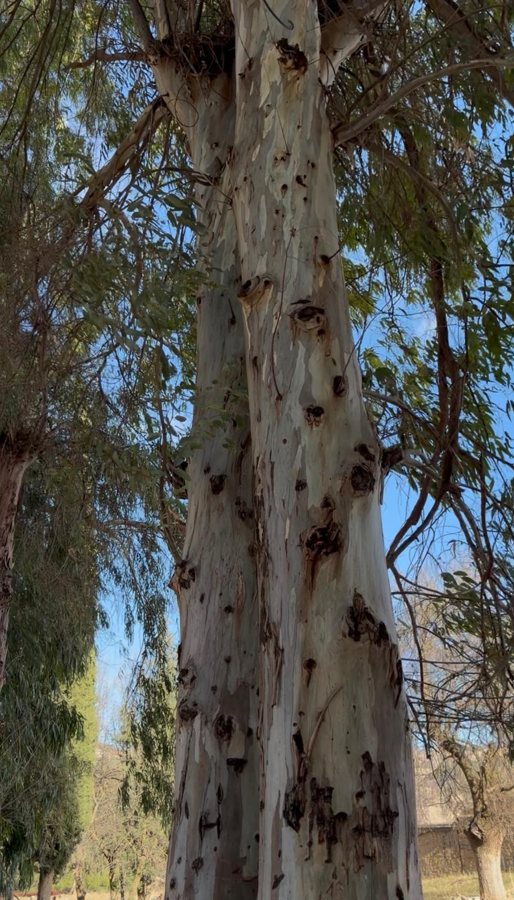
Spot a eucalyptus in central Baghdad and you could be forgiven for doing a double take. That is exactly what happened to a Young Pioneer Tours writer, who insisted to his Iraqi guide that the trees shading the affluent Karada district were Australian imports. The guide disagreed — three years later they are still arguing. But the Aussie is right: gum trees are now among the most widely planted non-native trees on Earth.
It is a strange thing to notice once you start. Eucalypts turn up beside Roman ruins at Djemila in Algeria, on Ethiopian highlands, and across much of the Middle East and Africa. Almost all of the 700-plus eucalyptus species evolved in Australia, ranging from coastal rainforest to arid interior, with the Mountain Ash among the tallest flowering trees in the world. So how did they end up everywhere?
The short answer is European botany and fast money. After the British set up colonies in Australia in 1788, specimens were shipped back to European gardens and research institutions. Through the 19th century, eucalypts proved a commercial hit: they grow far faster than most traditional hardwoods, which made them attractive for timber, firewood and paper. Portugal and Spain planted them at scale, with Portugal becoming a pulp and paper powerhouse. Brazil built vast plantations for timber and charcoal, while British colonial authorities promoted planting in India.
Africa's story is particularly vivid. In Ethiopia, Emperor Menelik II championed eucalyptus planting around Addis Ababa in the late 19th century because the booming capital was running out of building timber and firewood. The trees took off in the highlands and never left, and they became fixtures in Kenya and South Africa too. In drier parts of the Middle East and North Africa, their tolerance for tough conditions made them a go-to street and shade tree — which is why an Australian native now feels thoroughly at home in Iraq.
There is a catch worth knowing. Eucalypts are thirst thirsty, their oily leaves feed intense fires, and big plantations have drawn criticism for crowding out native vegetation. They are a living record of how colonial trade and forestry reshaped whole regions — not always for the better.
For travellers, this is the kind of detail that makes a walk through an unfamiliar city more interesting. That fragrant tree over the marketplace in Addis, the gum tree at a Roman ruin, the unlikely eucalypt in Karada: all of them are breadcrumbs back to one continent. Once you can identify a eucalyptus, you will never stop spotting them.