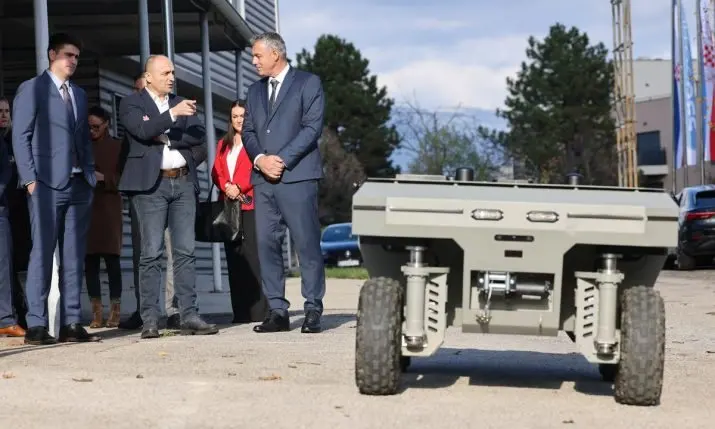
Defence Minister Ivan Anušić spent a Monday at Probotica, a Zagreb-based technology company that builds robotics, mechatronics and autonomous unmanned systems, to see how Croatia's homegrown tech could feed into the country's military capabilities.
Co-owner and chief technical officer Ante Bakić and director Roko Budić walked the minister through the company's work, demonstrating products at its production facilities and outlining where their technology could slot into defence and security operations. The tour is part of a broader push by the Ministry of Defence to build closer ties between Croatian high-tech firms and the Armed Forces.
Nothing was signed on the day — no contracts or procurement deals were announced. But the conversations carried a clear theme: that autonomous systems are becoming central to modern militaries, with uses spanning surveillance, reconnaissance and logistics, and that Croatia would rather nurture domestic expertise than rely entirely on imports. Officials also stressed cooperation between industry, universities and research institutes as a way to tailor solutions to what Croatian forces actually need.
For Croatia, a country of under four million people, the logic is twofold. Building capability in robotics and autonomous systems at home offers a degree of technological independence, and it lets small, specialised firms contribute to national defence in ways that would previously have been out of reach. Probotica is one of the companies positioning itself for that shift.
Why mention it on a travel site? Because Zagreb's story is changing. Croatia's capital has long been sold on its Austro-Hungarian architecture, café culture and cheap access to the Adriatic. But it's also quietly building a reputation as a regional tech hub — a side of the city most visitors never see. If domestic innovation and defence manufacturing grow as the ministry hopes, expect more business travel, more conferences and more tech-adjacent visitors passing through the city in the coming years. Zagreb airport has already been expanding its route network, and a deeper tech economy tends to pull in airlines, hotels and direct flights.
Travellers with a professional interest in robotics, engineering or defence tech — or journalists and researchers tracking Europe's smaller defence players — now have a name to know in Zagreb. For everyone else, it's a small but telling signal that the city behind the postcard is busier than it looks.