After four years without a dedicated London history museum, the rebranded London Museum opens its doors this Saturday, 28 November, in West Smithfield, just around the corner from Farringdon Station. Entry is free, walk-ins are welcome, though the museum suggests booking a free ticket for the busy early weeks.
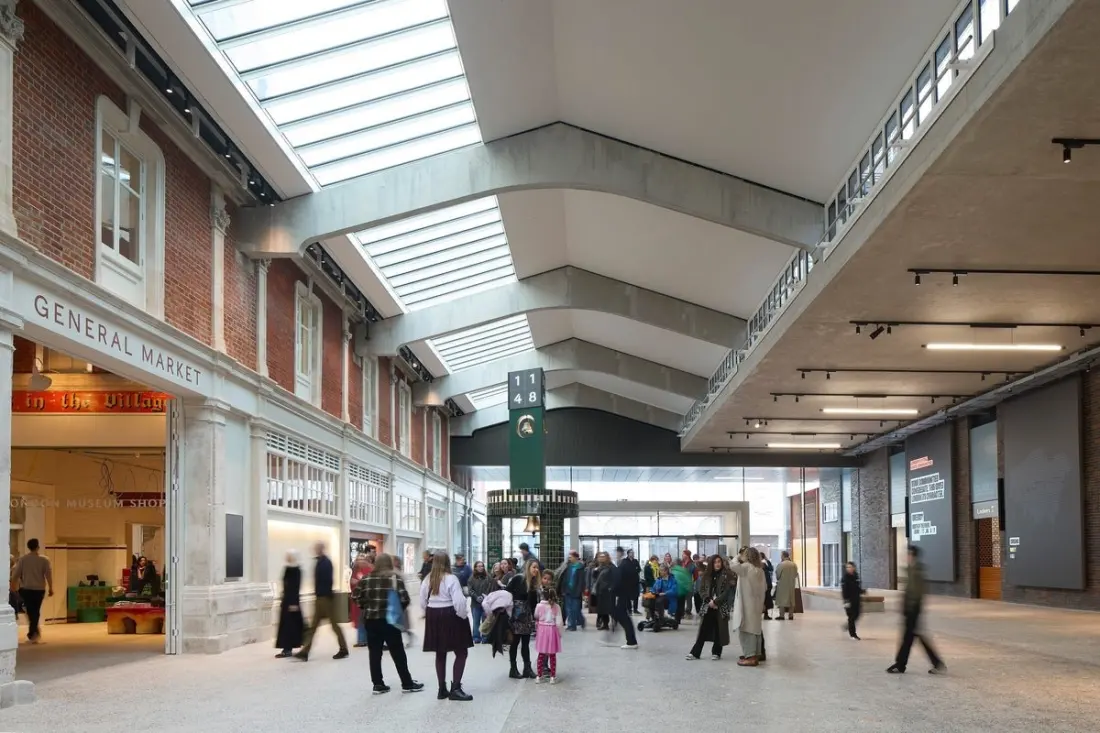
The project has been a decade in the making and cost £437m, transforming two former market buildings into a home for a collection of seven million objects. The Victorian General Market — once the country's biggest meat and poultry trading site — was derelict when the museum took it on. Restorers have revived its Horace Jones-designed facades, decorative ironwork and trading floors, and excavated vaults and salt stores. A neighbouring 1960s poultry market will follow in 2028 as a learning centre and temporary exhibition space. A happy accident during 2019 building works uncovered an 800-square-metre network of lost Victorian vaults, which will host rotating exhibitions — starting with "Londinium: the making of a Roman city", free and opening in spring 2027, featuring Roman wax writing tablets and other Bloomberg Collection artefacts.
The museum is organised into three zones. "Real Time", at the entrance, shows live London via giant animated screens — counting today's buses, for instance — and houses the Temperance Cocoa Rooms cafe, open daily and running 24 hours Thursday to Sunday on the site of a 19th-century temperance cocoa room. "Our Time" is the social hub, with a restaurant, shop and events space; its first exhibition, "London Tastes", guest-edited by Ruby Tandoh and Jonathan Nunn, celebrates the capital's food culture from Brixton Market to Beigel Bake and pie-and-mash shops. Down at Roman street level, "Past Time" takes you from London's earliest inhabitants through the Great Fire and the Blitz to the 2012 Olympics — with a window through which you can watch trains rumble past while passengers peer in.
Director Sharon Ament says the move was about visibility as much as space: the old Barbican site was hard to find, while Farringdon puts the museum at the centre of a major transport hub. Extended hours mean commuters can drop in after work, and the aim is a museum that works equally for born-and-bred Londoners and first-time visitors.
For travellers, this is a genuinely new free attraction right on the Elizabeth line and Thameslink network — easy to pair with St Paul's, Clerkenwell's food scene or a night out in the City. Book a slot for opening month, and consider the late openings for a quieter look.