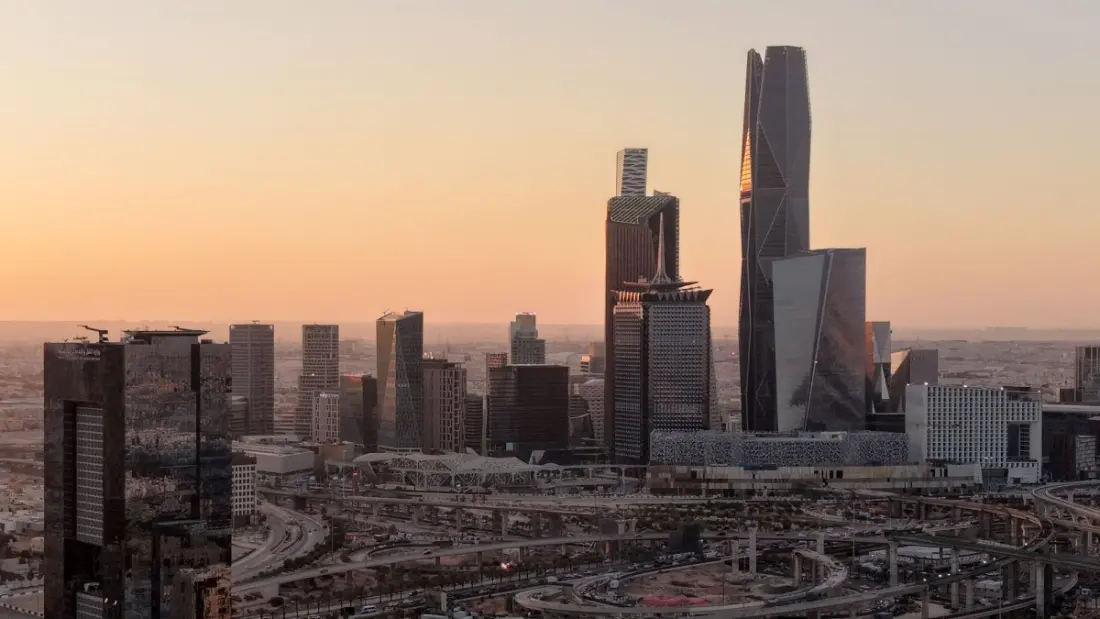
Riyadh's tallest skyscraper has been hit for the second time in less than a week. Yemen's Houthi fighters struck the tower — home to the headquarters of Saudi Arabia's Public Investment Fund — on Tuesday, injuring at least 11 people, according to the kingdom's Civil Defense. An earlier strike on the same building on 19 November caused damage but no injuries.
Photos released by Saudi authorities showed damage roughly halfway up the facade of the landmark, which anchors the capital's King Abdullah Financial District. The Saudi-led coalition described the incident as a terrorist attack on a skyscraper in the financial district, without giving further detail. It remains unclear exactly how much additional damage the latest impact caused.
The strike is part of a wider escalation. The Houthis, who control much of western Yemen including Sanaa, have been targeting Saudi airports, oil facilities and office buildings since Yemen's frozen civil war reignited in July — a spillover from the broader US-Iran conflict. On the ground, the fighting has displaced hundreds of thousands of people, and Houthi forces have pushed back troops aligned with the Saudi-backed, internationally recognised government, prompting widespread coalition air strikes.
For travellers, the practical fallout is significant. Most international flights to Riyadh have been cancelled, and Saudi Arabia has postponed or cancelled major international events — among them football's AFC Asian Cup, which had been due to be hosted in the kingdom. Anyone holding bookings to Riyadh or transiting through the capital should assume schedules are unstable and check directly with airlines before travelling. Events calendars for the city are also in flux, so conferences, matches and festivals may be rescheduled at short notice.
There is no sign of a return to normal operations yet, and with attacks continuing on a near-weekly rhythm, the situation around Riyadh's airspace and event programme could change quickly. Travellers with trips planned to Saudi Arabia in the coming months should monitor their foreign ministry's travel advisories, keep flexible or refundable bookings where possible, and consider alternative routings through other Gulf hubs such as Dubai or Doha if their onward plans allow it.
Daily Sabah Travel