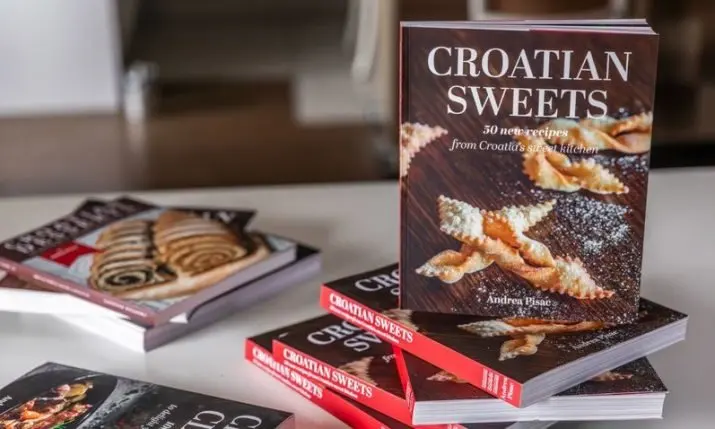
A quarter of a millionsteps is an exaggeration, but 595 step-by-step photographs is not. Croatian Sweets, the fourth cookbook from Zagreb-born anthropologist Andrea Pisac, has just been published, and it tackles a genuinely tricky problem: how do you write down a recipe that your grandmother measured by eye, judged by touch, and never once weighed?
The book runs to 288 pages and 50 traditional recipes, spanning everything from everyday afternoon cakes to the showstopper desserts that appear at Croatian weddings and christenings. Familiar names are here — Čupavci (those coconut-coated chocolate squares), Bajadera, Šubarice, Oblatne — alongside layered classics like Bijela pita and Medena pita. Then there are the regional rarities: the famous Rab Cake from the island of Rab, the elaborate Hrapačuša from Brač, Dubrovnik Cake and Frankopan Cake. Simpler pleasures get their due too, from jam-filled kiflice to yoghurt cakes and poppy seed treats.
What sets the book apart is the anthropology behind it. Pisac spent three years researching, testing and photographing the recipes, and her central insight is that the real obstacle to baking Croatian sweets isn't the ingredient list — it's the tacit knowledge. Knowing when dough feels right, or when a cream has thickened by sight, is exactly the kind of expertise that rarely survives being written down. So the book pairs the recipes with detailed instructions, baking tips and technique explanations, plus measurements in metric, cups and imperial units for bakers outside Croatia. It's written in English, designed, photographed and printed in Croatia, and available for worldwide delivery through Croatia Honestly.
Croatian Sweets joins Pisac's existing Croatian Cookbook Collection — Croatian Desserts, Croatian Classics and Croatian Savoury Baking — with 50 recipes that don't overlap with her first dessert book. As she puts it, some of these sweets are famous across the country while others belong to a single town, island or family tradition, and she wanted them all preserved.
For travellers, this is a useful piece of pre-trip homework. Croatia's cake culture is easy to miss if you only think of the food scene in terms of seafood and grill — but walk into almost any home, and you'll be offered coffee and something homemade. Knowing what Bajadera or an Oblatna actually is turns a roadside café stop or a konoba dessert menu into something much more interesting. If you're visiting during a village festival or a family celebration, expect the baking volume to be, in Pisac's words, quite astonishing.
Even if you never turn on an oven, the book doubles as a cultural primer: a guide to which sweets belong to which region, and the stories of hospitality and family identity baked into them. For anyone with Croatian roots or planning a trip to Dalmatia, the islands or the capital, it's a strong companion piece to any itinerary.