The shipboard spa started modestly. Steiner, a Mayfair hairdresser that once styled Queen Mary's hair, took its first contracts at sea in 1956, and Cunard upped the ante in the early 1980s by partnering with California's Golden Door retreat to bring fitness classes and massage aboard the QE2. A century on, the spa at sea has become a headline reason to book a cruise, not an afterthought.
The numbers back it up. The global spa industry generated $US157.4 billion (about $220 billion) in 2024 — 35 per cent more than in 2019, according to the Global Wellness Institute — and cruise lines have been quick to chase that spend. OneSpaWorld, the corporate descendant of Steiner, now runs wellness centres on nearly 200 ships. Modern shipboard spas can approach 3,000 square metres, packed with thermal suites, salt and ice rooms, cold plunges, hydrotherapy pools and even medi-spas.
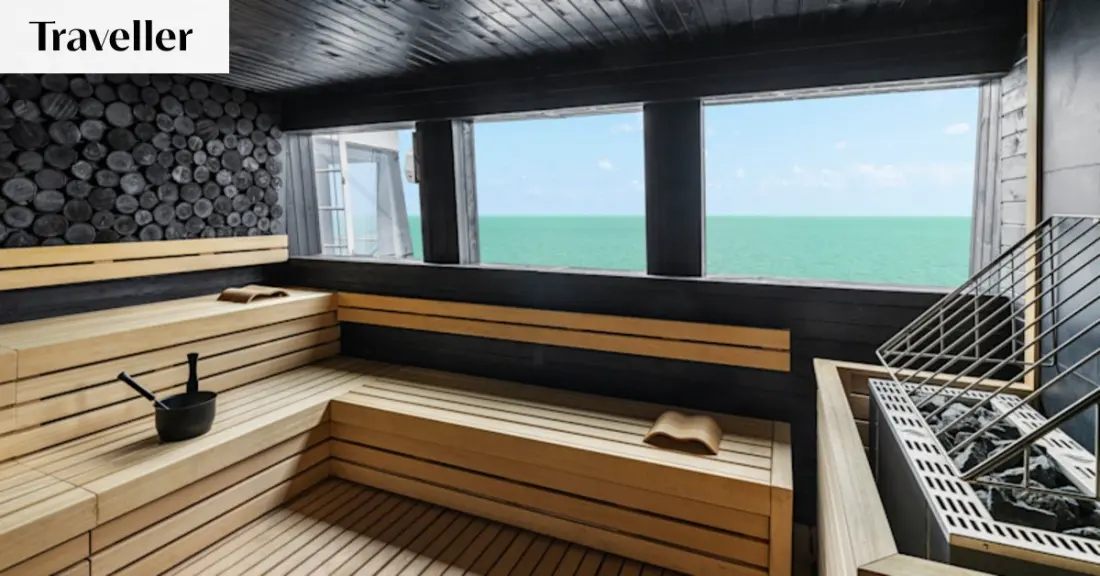
Norwegian Cruise Line shows how fast older ships are catching up. The 20-year-old Norwegian Jade and the 2007-launched Norwegian Gem have both had their Mandara spas rebuilt around passenger feedback: triple the hot-tile loungers, upgraded steam rooms and saunas, plus new additions like a charcoal sauna, an ice room and a salt room riding the halotherapy trend. There are four-senses relaxation loungers, experiential showers with multi-jet lighting effects, cold plunge pools and — a sign of where wellness is heading — IV therapy loungers marketed for everything from jetlag to hangovers.
Norwegian's next big ship, Norwegian Aura, launching in May, will carry what the line calls the industry's most expansive thermal suite, with 15 wellness experiences. And the competition is piling in: Celebrity Xcel (2025) has the line's largest spa with a hydra room and an outdoor "vitamin D deck" — otherwise known as a sunbathing spot. Cunard's Queen Anne introduced a Himalayan salt sauna and cryo-body treatments, Explora Journeys offers salt caves and ice falls, and MSC is rolling out Japanese head spas, AI skin analysis and injectables fleetwide.
For travellers, this changes the cruise calculus. Wellness-focused cruisers no longer need to tolerate a cramped treatment room next to the gym — thermal suites, cold immersion and even medical-grade treatments are becoming selling points on par with dining and entertainment. It also means good value is often found on refreshed older ships: Norwegian Jade and Gem carry under 2,500 passengers each but now boast spa facilities rivaling far newer vessels. If a halotherapy session or a charcoal sauna sounds more appealing than the buffet, the newest and smartest spa spaces at sea are worth checking before you book.