Every 1 and 2 November, Mexico stops to remember its dead — with colour, food and music rather than mourning. Día de los Muertos, one of the country's most important religious holidays, falls on All Saints' Day and All Souls' Day: the first honours children who have passed, the second adults. 2 November is an official public holiday, and while the festivities run passionately nationwide, they're often at their most authentic in smaller provincial towns.
Far from being grim, the holiday is a celebration of life's continuity, with roots stretching back to the Olmec, Zapotec, Maya and Purépecha civilisations — the Aztecs marked it too, in August on today's calendar. These days Halloween has crept alongside it, and the two have started to blend, though they remain distinct events at heart.
The heart of it all is the ofrenda — an altar built at home, in a plaza, or at a family grave, often planned weeks or even a year in advance. These aren't shrines for worship but tributes of remembrance, and they follow a loose structure: photographs of the departed and images of the Virgen de Guadalupe on top; offerings on the middle tier (toys for children, tequila, mezcal or atole for adults, plus favourite foods); and candles below — some families even leave a washbasin and towel so arriving spirits can freshen up. Every altar gets sugar calaveras and bunches of orange marigolds, the flor de muerto itself. Families also visit cemeteries to clean and decorate graves with the same offerings.
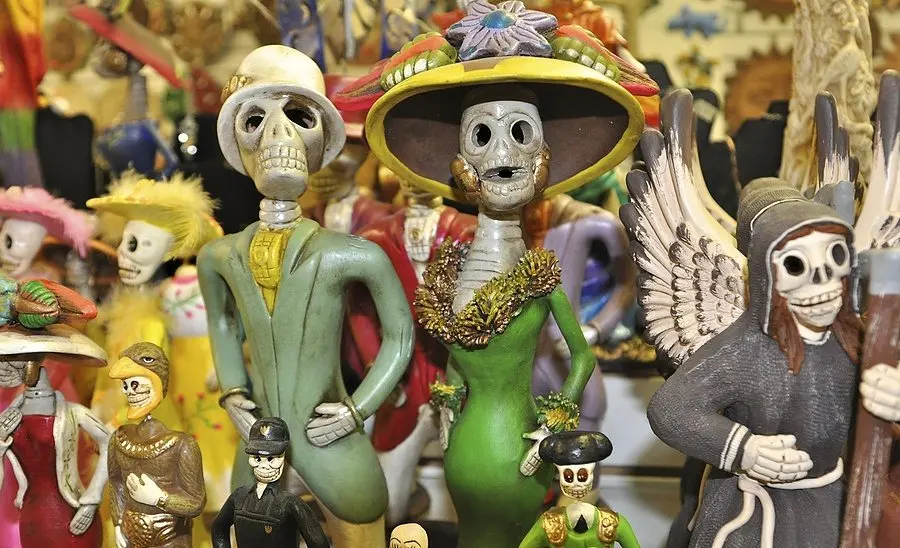
You'll spot the Catrina everywhere — the elegant skeleton lady with a grand plumed hat. She began as a zinc etching around 1910 by engraver José Guadalupe Posada, a political satire aimed at Mexicans aping European aristocratic style. Face-painting in her image has become a popular way for revellers to join in, and Mexico City stages a big downtown procession alongside the religious processions held in towns across the country.
Then there's the food. Pan de Muerto — a soft, semi-sweet bread dusted with sugar and laced with citrus — is the seasonal treat, best dunked in cinnamon-laced hot chocolate on a chilly November evening.
For travellers, the best-known places to witness it all are Oaxaca and the highland town of Pátzcuaro, both of which draw big international crowds. Book well ahead if either is on your list. But you don't need to chase the famous spots: communities all over Mexico stage their own versions, from cemetery vigils to public altars, and many families open their homes to visitors. Customs vary by region, yet wherever you find yourself in early November, you'll get a front-row seat to one of the most atmospheric and moving celebrations anywhere — one that says goodbye to the dead by celebrating everything they loved.