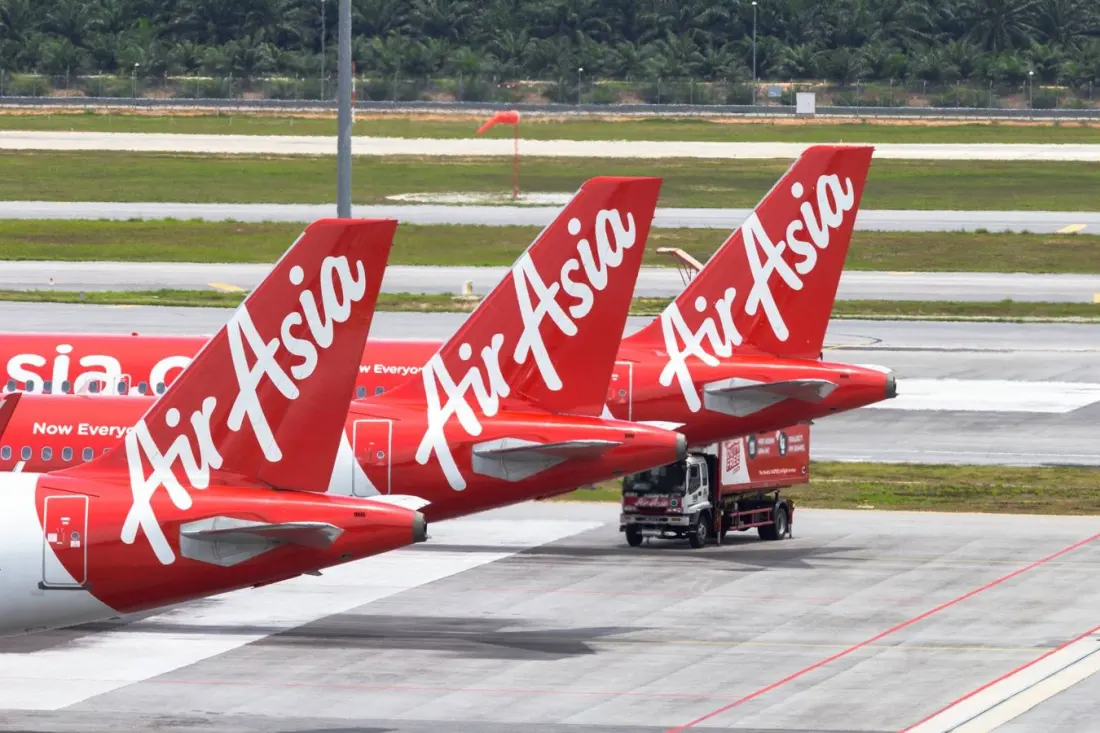
Skytrax's 2026 rankings put AirAsia at number 26 in the world — ahead of United, Alaska and JetBlue, and just behind Delta and its full-service rival Malaysia Airlines. For a low-cost carrier, that's unusual. But does the reality match the ranking? One frequent flyer who has taken dozens of AirAsia group flights across Southeast Asia says mostly yes, with a few caveats worth knowing before you book.
The practical differences show up immediately. Standard fares include no checked baggage, and carry-on is capped at just 7kg — trolley bags get weighed, even if backpacks usually slip through. The workaround is AirAsia's bundle fare, which adds a checked bag, a meal and seat selection. Meals are described as decent for a budget airline, but pre-booking them matters: on some low-cost carriers in the region, there's simply nothing to buy on board. One cautionary tale involved an eight-hour VietJet flight from Ho Chi Minh City to Brisbane with no food option at all.
AirAsia's home base, Terminal 2 at Kuala Lumpur International Airport, is genuinely convenient. A full shopping mall sits attached to the terminal — regular shops and a supermarket included — so you can eat cheaply and stock up before checking in. Taxis, the express train to central Kuala Lumpur and arrivals all route through the mall. Check-in is self-service, with passengers printing their own bag tags. In Bangkok, sister airline Thai AirAsia operates from Don Mueang, the city's secondary airport, which is well connected to the metro and surrounded by budget hotels — handy for late arrivals.
Booking runs smoothly through the AirAsia Move app, which also sells flights on rivals like VietJet and Singapore Airlines. The reviewer's verdict on comparisons: pay the small premium for AirAsia over VietJet, where repeated delays and chaotic check-in queues at Ho Chi Minh City were a recurring theme. Other solid regional budget options include Scoot, Citilink, Lion Air and IndiGo — the last of which the reviewer actually ranks above AirAsia, since fares typically include meals and checked bags, even if Skytrax places it lower.
The airline itself is in growth mode. The group flies roughly 244 aircraft, all Airbus, and has around 520 planes on firm order — among the biggest order books anywhere. A 2026 deal for 150 Airbus A220-300s (with options for 150 more) signals a shift away from widebody A330s towards high-frequency narrowbody flying, with deliveries starting in 2028.
Why should a traveller care? Because AirAsia is often the cheapest way across Southeast Asia and, unlike some rivals, delivers without drama: gates close to the terminal rather than distant bus stands, reliable punctuality and an easy booking flow. Just budget for the add-ons, weigh your carry-on before you leave the hotel, and pre-order any meals. For hops around Malaysia, Thailand, Indonesia and Vietnam, it remains the region's default budget choice — with IndiGo a serious contender if your route extends to India.