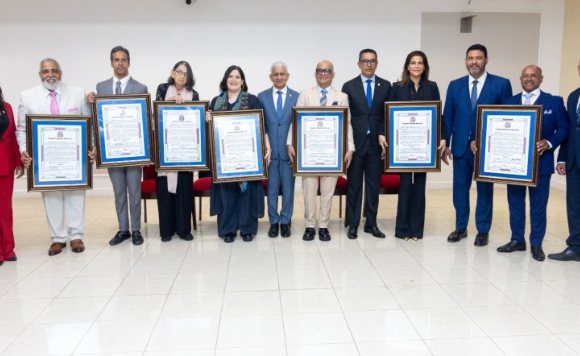
The Dominican Senate has handed out formal recognitions to seven Dominicans whose work has shaped the country's cultural footprint at home and abroad. The ceremony took place in Santo Domingo on a Wednesday, with senators Franklin Romero and Rafael Barón Duluc Rijo presenting the resolutions.
Three of the honourees received their recognition in person. Philanthropist Lucy Doughty was praised for her charitable work, sculptor Juan Trinidad for a career that has carried Dominican sculpture onto international stages, and fashion designer Luis Menieur for building up and promoting Dominican modelling and fashion talent well beyond the island's shores.
Four honours were awarded posthumously, and this is where the list gets especially interesting for anyone who has ever danced merengue or wandered into a Dominican gallery. Musician and arranger Henry Hierro was celebrated for his influence on modern merengue, including his production work with the group La Gran Manzana. Painter Iván Tovar, known for a refined technique that earned him recognition far outside the Caribbean, was also honoured, as was Iván García Guerra, an actor, director, playwright and theatre educator with a career spanning decades. The seventh name, Felipe "Lipe" Collado, was a journalist, writer and professor who published more than 35 books while teaching a generation of Dominican readers and students.
Senators framed the awards as more than ceremony. Romero pointed to the lasting influence of the honourees on Dominican culture, while Duluc argued that artists and philanthropists play a central role in shaping a nation's identity and development. The recipients and their families thanked the Senate and the legislators behind the resolutions.
For travellers, the story is a useful pointer to what Dominican culture actually consists of beyond the beach resorts. Santo Domingo's Colonial Zone is where much of this legacy lives: galleries showing the tradition Tovar worked in, theatres connected to García Guerra's generation, and a live merengue scene that owes a debt to arrangers like Hierro. Knowing these names turns a stroll through the capital into something richer than sightseeing. It is also a reminder that the Dominican Republic exports more than rum and baseball — its fashion, sculpture and literature have long travelled internationally, and the Senate is now saying so out loud.