Guam's busiest tourist street carries the name of a man whose arrival 350 years ago transformed the island — and whose memory still divides opinion. Now the Archdiocese of Agana has formally begun the process of canonising Diego Luis de San Vitores, the Spanish Jesuit priest who founded the Catholic mission on Guam in 1668 and was killed there in 1672.
On September 1, Archbishop Ryan Jimenez transferred relics linked to the Blessed Diego — his cassock, the machete that ended his life, a painting of his image and a letter in his hand — to Blessed Diego Church in Tumon, the heart of the island's hotel belt. Parishes across Guam will roll out education and devotion programmes in the coming months.
Who was he? Born into a wealthy family in Burgos, Spain, in 1627, San Vitores decided at 11 that he would become a Jesuit, defying parents who wanted better for him. After ordination he hoped for China or Japan but was sent to the Philippines instead. A stopover on Guam in 1662 convinced him the CHamoru people were his calling; after years of lobbying Jesuit superiors and King Philip IV, he returned in June 1668 with a small band of missionaries.
Chief Kepuha of Hagåtña welcomed him and granted land for the mission, and for a while things went well. But baptising infants and pushing families away from ancestral beliefs bred fear and resentment — a rumour, spread by a Chinese resident named Choco, that baptismal water was poisonous took hold in an age of high infant mortality. Violence followed, and by 1671 fighters had surrounded the Hagåtña mission.
In April 1672, San Vitores and his young Filipino catechist Pedro Calungsod travelled to Tumon, where chief Matapang refused permission to baptise his newborn daughter. San Vitores baptised the baby anyway while Matapang was away fetching weapons. Both priests were killed, their bodies thrown into the sea. San Vitores was 44. He was beatified by Pope John Paul II in 1985.
Jesuit historian Fr. Francis Hezel, who has written a book on him, argues the man is still widely misread. Old accounts cast him as stern, yet he sang to children, joked with villagers, earned the nickname "God's troubadour" and refused eyeglasses as a luxury unfitting for someone serving the poor. He was, Hezel says, a pacifist who initially refused military protection for the mission. Still, the consequences of his arrival were profound: population collapse driven largely by disease, and the impoverishment of the CHamoru after the Spanish-CHamoru Wars ended around 1700-1725 — though CHamoru culture endured, often woven into or hidden behind Catholic tradition.
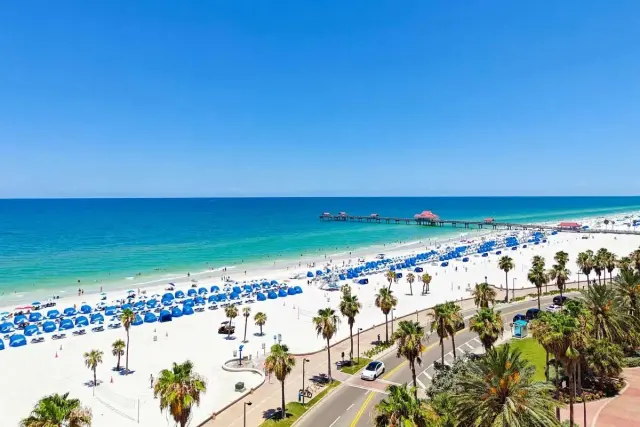
For visitors, this is a reminder that Guam's resort strip sits on layered, contested history. The church in Tumon holding the relics now sits steps from the duty-free shops and hotel towers of San Vitores Road — an easy detour for anyone curious about how the island's Catholic identity took root.