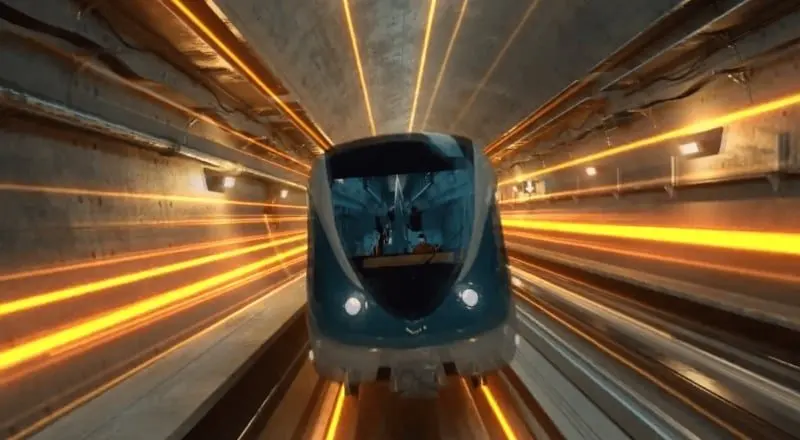
Getting around Dubai could be about to head underground in a big way. Mattar Al Tayer, director general of the city's Roads and Transport Authority (RTA), has confirmed that a proposed underground transport network is under review — a plan that could significantly reshape how both residents and tourists move around the city.
Announced at the Mohammed bin Rashid Leadership Forum, the concept would tie into Dubai's existing public transport setup. The pitch isn't just about speed, either: by pushing more transit below street level, the city would free up surface space for green areas, walkable zones and community-focused neighbourhoods — a notable shift for a city better known for highways than sidewalks. A video shown with the announcement featured metro trains gliding underground past Dubai's headline landmarks, hinting that the network would be designed with the tourist trail in mind.
The proposal doesn't exist in a vacuum. Dubai has been quietly assembling one of the region's most ambitious transport build-outs. This summer saw the launch of passenger services on Etihad Rail, linking Dubai with Abu Dhabi, Sharjah and Fujairah by train — a genuine game-changer for anyone wanting to see more of the UAE without renting a car.
Then there's the Dubai Metro Gold Line, due in September 2032. At 42 kilometres and 18 stations, it will be the city's first fully underground metro line, running from Jumeirah Golf Estates (where it connects with Etihad Rail) through to Al Ghubaiba near the old town. Construction is also under way on Dubai Loop, the underground shuttle system the RTA is building with Elon Musk's Boring Company. It'll start with stops around the Dubai International Financial Centre and Dubai Mall, before growing to 19 stations across 22 kilometres.
For travellers, the cumulative effect is significant. Dubai's major attractions are spread out, and until now the practical answer has often been taxis and ride-hailing. A denser underground network — plus intercity rail — makes a car-free Dubai trip genuinely realistic: metro from the airport, train down to Abu Dhabi for the Louvre, a Loop shuttle to the Dubai Mall fountains, all without haggling over fares in summer heat. If you're planning a trip later this decade, it's worth checking what's opened before you default to a taxi budget.
Timelines for the new network haven't been announced — it's still at the review stage — but the direction of travel is clear. Dubai wants visitors and residents moving underground so the streets above can breathe.