When animal attacks make the news, the victims are usually framed as unlucky tourists or hikers. A roundup of recent incidents tells a different story: the people most often hurt by wildlife are those who live alongside it every day.
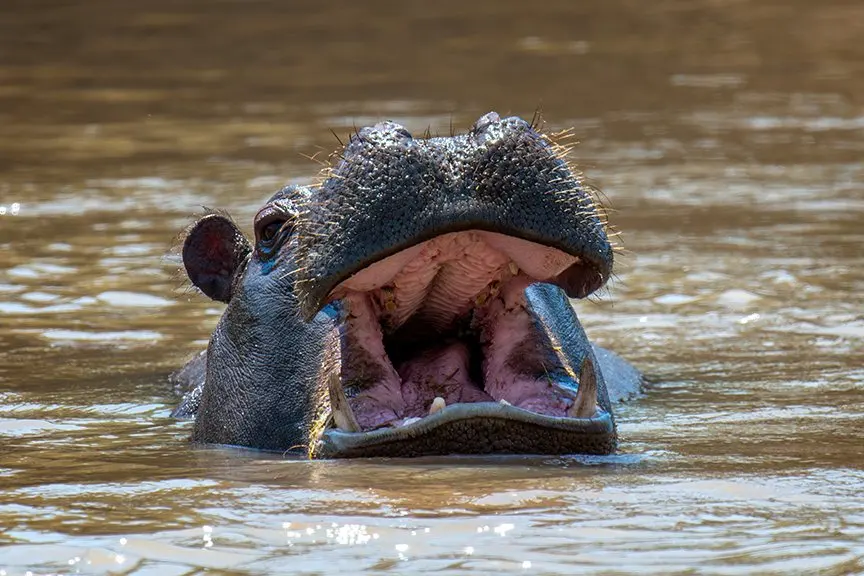
The deadliest case came from Lake Tumba in the Democratic Republic of Congo, where a hippopotamus rammed a wooden canoe during a night crossing. A mother and two of her children drowned; only one of the four family members aboard survived. Hippos look placid but are among Africa's most dangerous animals, and small boats on lakes and rivers at night are especially vulnerable.
Kenya saw two separate attacks around the same time. Mary Thandi, 35, and her 15-year-old daughter Esther were seriously injured when a hippo attacked them near the Thiba River on the evening of October 10; two companions escaped unharmed. Days earlier, 60-year-old herder George Mbae Kalubira was killed by a wild elephant while searching for grazing land for his goats at around 5 am — a reminder that dawn and dusk are peak hours for encounters with large game.
Snakebite dominated the incidents in India. A professional snake handler died after a bite in Kerala, with local reports giving no details on the species. In Bihar, five-year-old Ishu Kumar was bitten on the finger at a childcare centre; his family says staff sent him home instead of arranging treatment, and he later died after neighbours suggested a ritual remedy first. Furious villagers blocked a highway with the boy's body to demand an investigation. In Maharashtra, 51-year-old Charlette Gonsalves was bitten by a venomous snake in her kitchen before sunrise; her family did not recognise the injury as a snakebite, and she died the next morning after being moved between three hospitals.
Two other cases ended differently. In Vietnam's Đồng Tháp Province, a 44-year-old man cutting grass near a pond was bitten on the hand by a green snake. He became dizzy within three minutes and was vomiting blood within 20, but quick treatment with antivenom and plasma saved his life. And in Colorado, a 34-year-old man died roughly 83 hours after his pet Gila monster clamped onto his hand for several minutes — his partner finally got it off with a spray of hand sanitizer — after the venom triggered severe cardiovascular and neurological complications. It is a rare but stark warning about keeping venomous reptiles as pets.
Why should travellers care? Because the lessons apply to visitors too. Hippos and elephants in Africa are fast, territorial and most active at dawn and dusk, so keep well clear on foot and never assume water is safe. Snakebites are a genuine risk in rural South and Southeast Asia — wear covered footwear at night, use a torch, and get to a hospital with antivenom immediately rather than seeking traditional remedies, which cost several victims here precious time. Venomous creatures rarely seek people out, but the consequences of a delayed response are severe.