Burning through roughly 5,000 calories a day on a thru-hike sounds dreamy until you realise you're only eating 3,500. That was the mistake one hiker made during their first month on the Continental Divide Trail — a 3,100-mile route along the Rocky Mountains from Mexico to Canada. With no rest days and no way to recover off-trail, the energy deficit caught up fast. The fix? A ruthlessly planned daily menu that now hits just over 5,000 calories. Here's how it works, and what any long-distance hiker can steal from it.
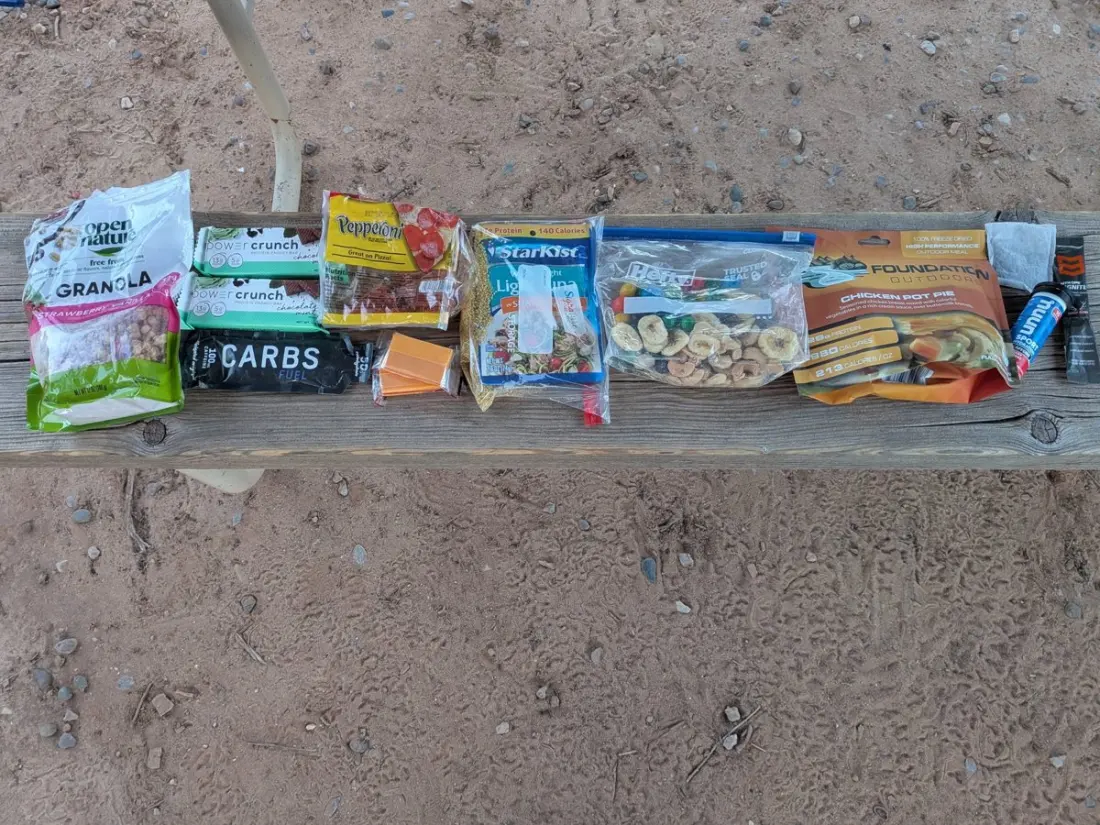
The day starts with one of two breakfasts packed out from the last resupply town, usually enough for five to eight days of walking. Option one is three packets of maple and brown sugar instant porridge (480 calories) — a warm, comforting start on cold mountain mornings. Option two is half a bag of strawberry and vanilla granola with powdered milk mixed into water, coming in at around 830 calories.
Then comes the discipline part: a phone alarm rings every 90 minutes to prompt a snack. Over a hiking day of nine to twelve hours, that regular drip-feed matters more than three big meals. Snacks rotate between protein bars stashed in backpack pockets for grab-and-eat moments, pre-packaged cheese with pepperoni or a meat stick, and Ritz cheese sandwich packs — light, sealed and shelf-stable.
Lunch, when weather, water and time allow, is a hot meal. The go-to is half a box of flavoured couscous with two packets of tuna and mayo (around 650 calories), which can also be cold-soaked. The alternative is cheap, universally stocked ramen bulked up with freeze-dried chicken, worth nearly 700 calories.
Afternoon snacking is a daily bag of DIY trail mix — banana chips, cashews, raisins, chocolate and peanut M&M's and Mike & Ike's — a hefty 1,460 calories per bag. Dinner is the day's treat: a 950-calorie premade backpacker meal from Foundation Outdoors, followed by tea and cookies for another 300.
The clever extras are worth noting. Cycling-style carb gels give a quick burst on steep climbs. Caffeine electrolyte sachets deliver 200mg of caffeine per litre of water for long, grinding road sections. And for morale, there's Haribo and Kendal Mint Cake — the British hiker's taste of home. None of it is counted toward the 5,000-calorie baseline; it's pure insurance.
Why does this matter if you're not hiking the CDT? Because under-fuelling is the most common mistake on any multi-day trek, whether it's a week in the Alps or a long-distance route closer to home. The lessons translate directly: calculate your burn honestly, plan around resupply logistics, favour calorie-dense lightweight foods, and eat little and often rather than waiting until you're starving. Alarms as eating reminders sound excessive until you've bonked ten miles from camp. Anyone planning a long trek — or just a demanding day hike — will find this a practical template rather than a curiosity. Who knew 5,000 calories could look so organised?