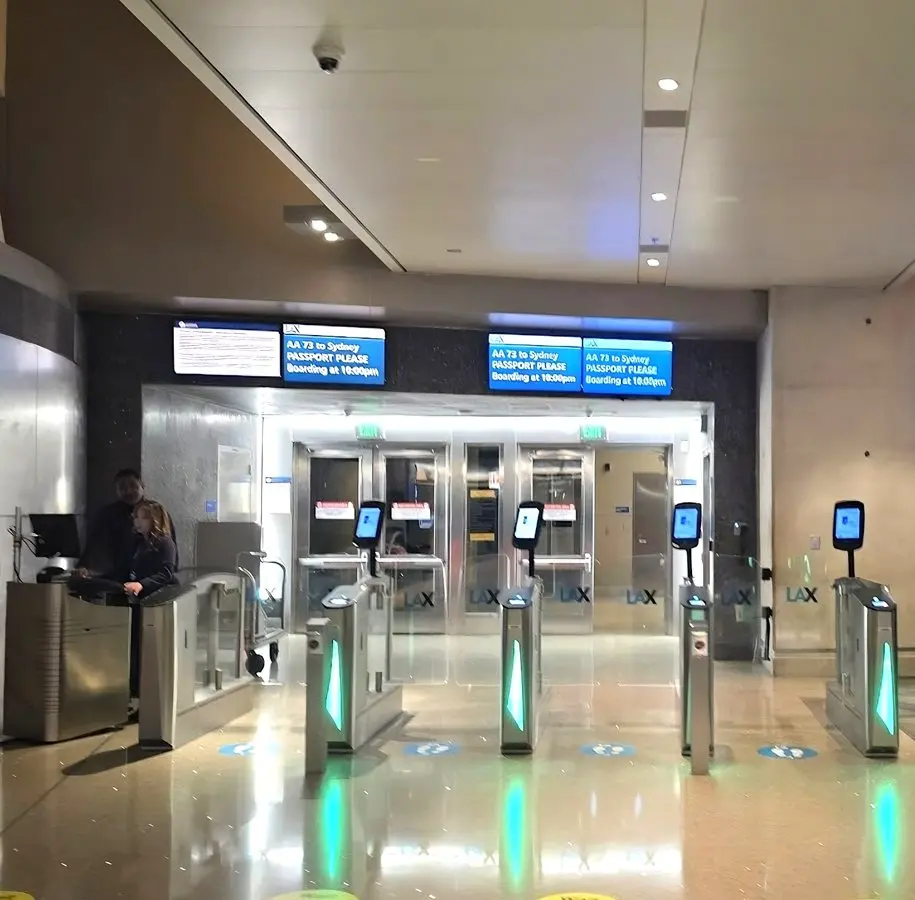
American Airlines has started rolling out electronic boarding gates at Dallas-Fort Worth, and the technology has an unlikely admirer: United Airlines CEO Scott Kirby. After flying American through DFW and seeing the glass-barrier gates in action, Kirby reportedly emailed his own team asking why United didn't have them - only to learn similar gates were already on the way for Houston. He's been openly benchmarking rivals, saying he's flown American, Delta and Southwest at least three times each in the past year to hunt for ideas worth stealing.
The gates themselves are straightforward. Glass barriers open once the system validates a boarding pass, replacing the manual document checks most travellers know well. American unveiled the kit in April and has since opened its new Terminal C pier at DFW with the technology at all nine gates. The airline's pitch: control the pace of passengers entering the jet bridge, cut down manual work at the podium, and free up (or reduce) gate agent labour.
Here's the catch, and it's one anyone who's stood in a gate-area scrum already understands. Scanning a barcode isn't what makes boarding slow. The real bottlenecks are overstuffed carry-ons, scarce overhead bin space, gate-checking bags, families bunching up during preboarding and standby processing at the podium. Automated gates handle queue management and access control only - they don't touch any of that. If anything, an unassisted scan-and-wait cycle at the glass barrier can take longer per passenger than a human waving you through.
There's also a privacy angle worth knowing about. The manufacturer offers facial recognition as an option, and the piece raises open questions about where biometric data comes from, how accurate the systems are, and what happens to your image afterwards. Meanwhile, US airports are already expanding facial recognition at international departure gates, where a camera snaps each passenger and Customs and Border Protection's cloud system matches the photo against passport or visa records and the flight manifest. A match means you board; a miss means a manual document check.
Kirby's own yardstick is telling. He judges air travel through the experience of flying with small children - he has seven - and argues that if flying works for families with young kids, it works for everyone. Automated gates do little for the family wrangling a stroller, three bags and a toddler at the jet bridge door.
For travellers, the takeaway is mostly about expectations. If you're connecting through DFW, expect the new Terminal C gates to look sleeker and move the queue differently, but don't assume boarding will be faster. And keep an eye on how these systems spread - United's Houston rollout suggests this kit will be standard at major US hubs before long, which makes questions about speed, service and biometric data worth asking now.
View from the Wing