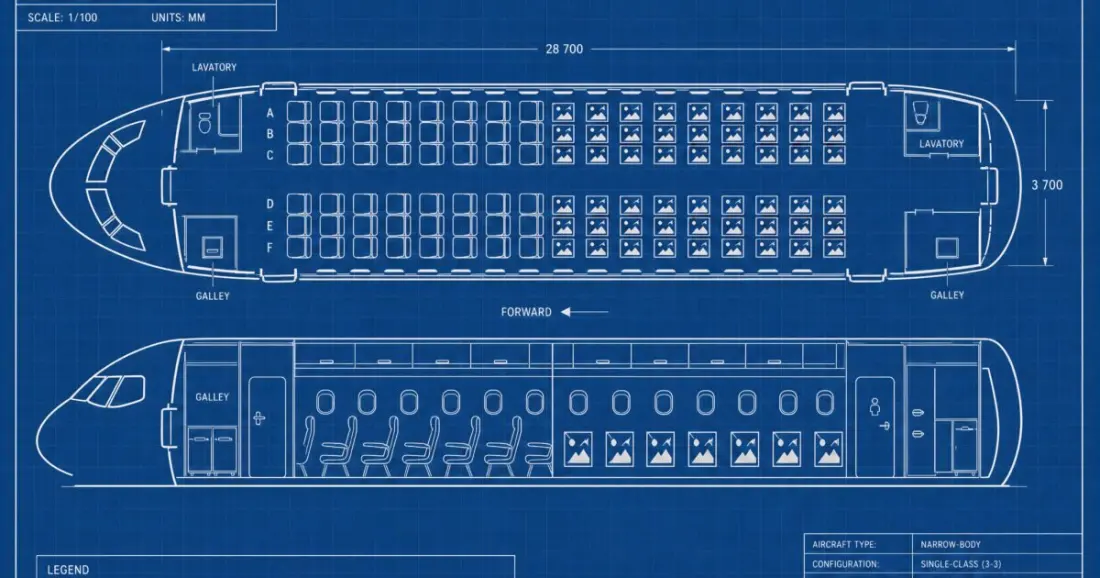
The cheapest seat on the plane is quietly becoming an endangered species. Across the big US carriers, economy sections are being trimmed to make room for premium rows — and the numbers are substantial. Delta's incoming Airbus A350-1000 is expected to carry 13 fewer economy seats than its current A350-900. British Airways is cutting World Traveller capacity on its A380s from 303 seats to 215. United is doing the same, American has pledged to grow its premium cabins by 50% by 2030, and even Alaska Airlines — historically a value carrier — plans to shrink economy to fit pricier options.
The strategy is barely hidden. Delta CEO Ed Bastian has said the airline can't win by offering the cheapest product, only the best. Aviation analyst William J. McGee put it more bluntly to the Associated Press: instead of 'let them eat cake' in the back of the plane, the big carriers are saying 'let them eat Biscoffs.' The commercial logic is simple — the top 10% of earners now drive nearly half of consumer spending, so airlines are building lounges, suites and premium rows for them, while basic economy gets thinner and meaner.
So what should a budget traveller actually do? Four moves, according to Frommer's. Book earlier than you used to: with fewer cheap seats per flight, the lowest fares sell out first. Budget more: basic supply and demand means shrinking economy inventory will push fares up, on top of fuel-driven increases. Look hard at no-frills carriers — though that's getting harder too, since budget long-haul options like Norse Atlantic Airways have slashed their US routes. And manage expectations: the cheapest tickets now typically mean no meal, no included bag and no seat assignment until the last minute.
There's a bigger picture here, too. The piece traces how flying went from a quasi-public service in the 1950s jet age to a shareholder-driven industry after the 1978 deregulation — and notes that today's American travellers face just three dominant carriers plus a handful of independents fighting to survive. With no high-speed rail alternative at scale, air travel remains essential infrastructure for ordinary Americans, yet it's increasingly priced and designed for the top of a 'K-shaped' economy.
Why should holidaymakers care beyond the US? Because this is a template. Premium-heavy cabin redesigns are rolling out globally, and European carriers like British Airways are part of the trend. If your travel budget depends on a standard economy fare, the window for snagging one at a decent price is narrowing on both sides of the Atlantic. The practical takeaway: plan further ahead, compare low-cost and legacy carriers side by side, and factor a slightly higher airfare into next year's holiday budget before the seats you want are gone.