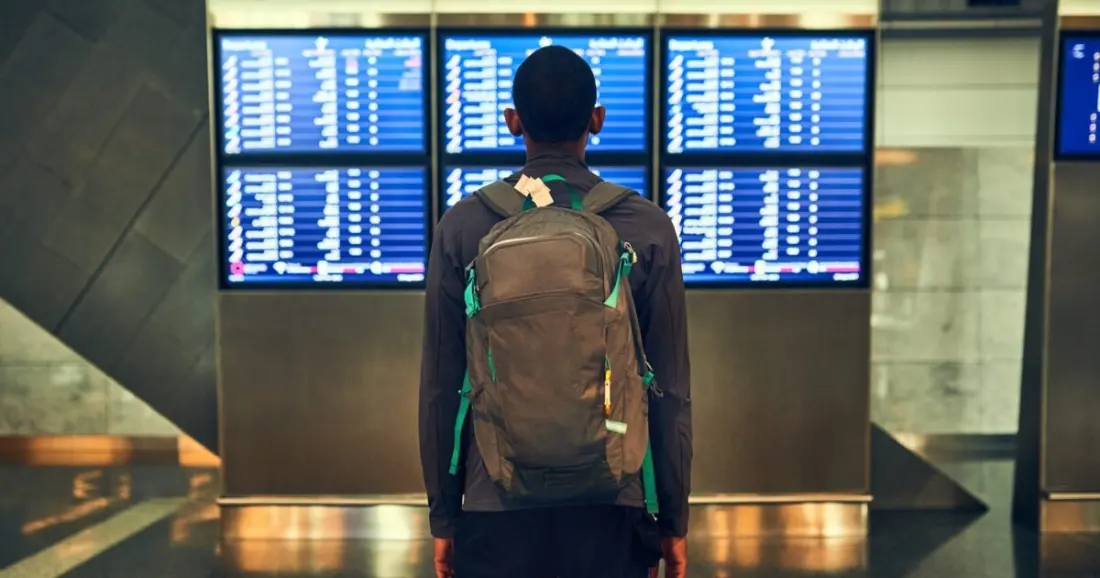
If you have ever been stranded at a US airport watching the departure board fill with delays, here is news that affects your wallet: the Department of Transportation has redefined what counts as an airline's fault, and the new rules take effect on February 1, 2027 after an extension requested by the industry lobbying group Airlines for America. The change will make it harder to get meals, hotel rooms or any compensation when your flight falls apart.
Quick refresher: unlike Europe, where regulation (EU261) entitles passengers to cash compensation for long delays regardless of blame-heavy arguments, the US has never had a legal requirement to compensate. What protection exists comes from airlines' own customer service plans. Under those voluntary commitments, all nine major US carriers promise meals or vouchers when an airline-caused delay or cancellation stretches past three hours, and everyone except Frontier will put you up in a hotel for an overnight cancellation that was their fault.
The new regulation redraws the boundaries. Previously, things like maintenance problems, crew scheduling and aircraft cleaning were generally treated as within an airline's control. Now ten specific scenarios are classified as outside the carrier's responsibility, meaning the airlines' compensation promises simply don't apply if the disruption traces back to one of them.
The list is a mix of the reasonable and the expansive. Weather damage, sabotage, volcanic ash closures, unruly passenger removals, and onboard medical emergencies are hard to argue with. But the list also includes unscheduled maintenance and certain system outages — categories that used to fall on the airline's side of the ledger — plus cybersecurity attacks, provided the carrier was compliant with relevant regulations. Critics note that this effectively hands airlines more ways to dodge paying up while the government's only real pledge is to hold carriers to promises they wrote themselves.
There is a sliver of optimism for passengers. Carriers are under no obligation to keep offering anything at all, yet most do — and some may choose to maintain or even widen their commitments to stay competitive, a point trade groups like IATA lean on when arguing that market forces will keep airlines honest. Whether that holds up when the incentive to pay shrinks is a fair question.
For travellers, the practical takeaway is this: read the customer service plan of the airline you are booking before February 2027, pay with a credit card that includes travel delay coverage, and consider travel insurance for trips where a long delay would genuinely hurt. Europe-bound itineraries departing from the EU still carry the strong statutory protections, so if compensation matters to you, that matters too.