Aviation is one of the toughest sectors to decarbonise, but a Dutch researcher argues Europe should stop settling for incremental greening and force an electric revolution instead. Maarten Steinbuch, Professor of Mechanical Engineering at Eindhoven University of Technology, told Euronews that current efforts amount to an "evolution, not a revolution", and that regulators should take a page from the car industry. Strict deadlines requiring carmakers to sell enough electric models, he says, genuinely accelerated the shift to EVs — and similar rules could do the same for aircraft makers, setting years by which part of airline fleets must be electrified.
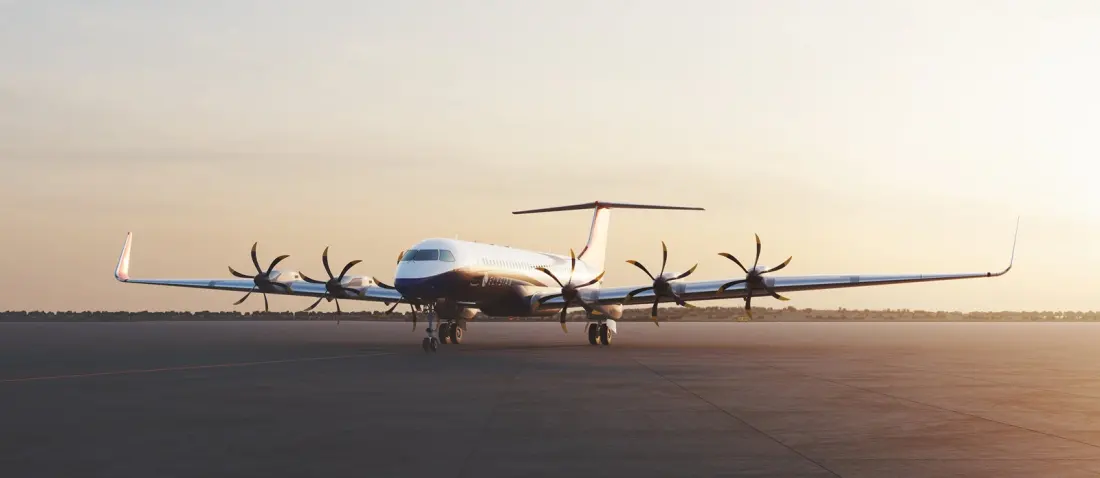
The technology is closer than many travellers might think. Start-ups around the world are racing to build the first battery-powered passenger planes. Dutch firm Elysian Aircraft is developing the E9X, billed as the planet's first battery-powered passenger aircraft — a six-engined design with folding wingtips and forty 1,000 kg battery packs per wing. Co-founder Daniel Jacobsen says it should carry 90 passengers up to 800 km initially, eventually 1,000 km, which he estimates would cut emissions to zero for roughly half the world's flights and shrink aviation's total footprint by about 80%. In the US, Heart Aerospace is targeting 2031 for its 30-seat hybrid-electric ES-30 regional airliner, while SAS is still taking bookings for electric and hydrogen flights it hopes to run by 2028 with Heart and Airbus partners.
Britain is also in the game. BETA Technologies ran successful electric trials on Scottish mail routes earlier in 2026, flying between Glasgow and Dundee and over Aberdeen, Inverness, Orkney and Wick. Loganair, the UK's largest regional airline, aims to become Europe's first commercial carrier with an electric fleet by 2029. Add the growing number of successful eVTOL test flights, and short-hop electric aviation starts to look genuinely plausible within the decade.
The pressure to move is real. Aviation accounts for somewhere between 3% and 6% of global heating pollution depending on the estimate, and despite the UN's International Civil Aviation Organization calling for carbon-neutral growth since 2020, CO₂ emissions from international flying have actually risen since then. Steinbuch's view is that the real breakthrough will come with solid-state batteries reaching 500 watt-hours per kilogram — something he expects by around 2032, or sooner if the EU legislates with ambition.
Why should holidaymakers care? Because short-haul routes — the Glasgow–Dundee, Oslo–Gothenburg type flights that dot European timetables — are exactly where battery planes will land first. If regulators act, the regional hop you take in the early 2030s could be quieter, cheaper and close to emissions-free. The question isn't really whether the planes will be ready; it's whether European authorities will set the deadlines that make airlines buy them.