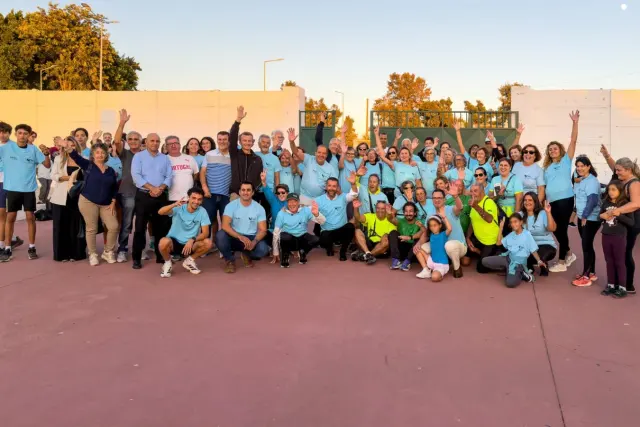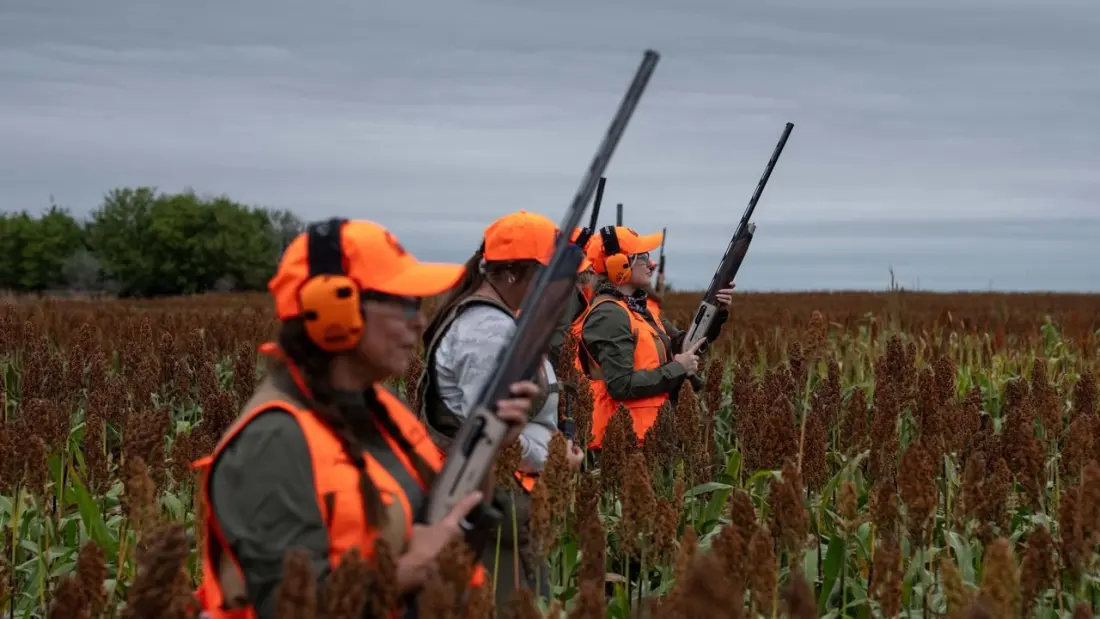
On 6,000 acres of sorghum outside Emery, South Dakota, a group of first-time women hunters walked in formation behind trained bird dogs, shotguns raised, waiting for a ring-necked rooster to burst from the stubble. They were there for Hunt Like a Girl, a three-day, women-only retreat for beginners, founded by Karen Butler and hosted this time at A1 Al's Pheasant Ranch, about 45 minutes from Sioux Falls.
Butler started her broader program, Shoot Like a Girl, in 2008 after target shooting pulled her through a rough patch — a divorce and a custody battle had left her low, and a camping trip near Pikes Peak with friends introduced her to firearms. She never looked back, eventually learning to hunt and feeding her sons meat she harvested herself. She now frames hunting less as a sport than as a food source, and her retreats reflect that: guests get firearms safety briefings, guided hunts with dogs, lessons on breaking down birds, guest talks on conservation, and bird processing so they can take meat home. Meals lean heavily on the quarry — think pheasant pasta braised in white wine and butter.
The retreats tap a real shift. Women now make up roughly 22% of America's 3.7 million hunters, per a 2022 federal survey, making them the sport's fastest-growing demographic. The National Shooting Sports Foundation estimates nearly half of the 11 million first-time firearms bought in 2020-21 went to women. Groups like Girl & A Gun have found that about 35% of new women shooters cite the social side as their main reason for joining — community as much as marksmanship.
There's a conservation angle too. South Dakota's Second Century Habitat Fund pays landowners to keep sorghum planted through 10-year contracts, preserving pheasant habitat on a state that's roughly 80% privately owned. Sorghum doubles as a carbon sink and needs little water. License fees and federal excise taxes on gear also help fund wildlife conservation.
The writer's account of the retreat is disarmingly honest: morning meditations facing the sorghum, walking the uneven field in near-silence, muttering the 1.5-second shooting sequence like a mantra. One woman, outshot for two days, dropped two birds back to back on the final morning. When the writer took her first rooster, the tears surprised her — Butler called it reverence. Back home in Oklahoma, the bird became a stew with wild rice and mushrooms.
For travellers, this is a genuinely different kind of prairie holiday: hands-on, emotionally charged, and grounded in where your food actually comes from. You don't need experience — that's the point — just reasonable fitness for hours of walking and an open mind about eating what you harvest. It suits solo women, friend groups, or anyone curious about hunting culture without the intimidating clubhouse vibe.