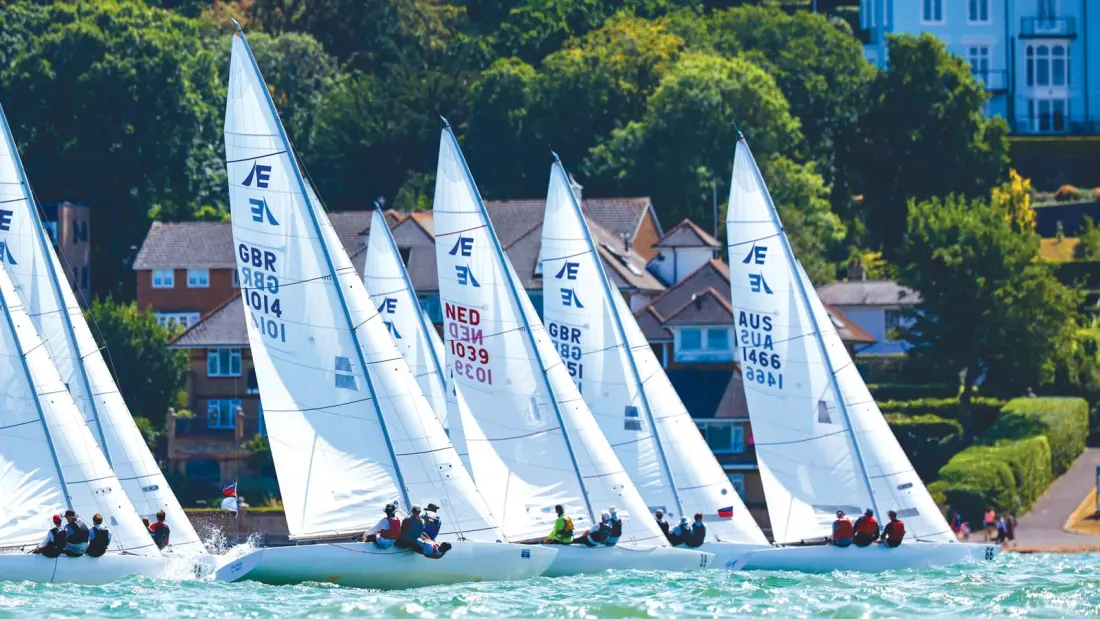
Most sailors have a comfort zone. Daisy Collingridge, the British Olympic campaigner, grew up loving heavy air — the harder you worked, the faster the boat went. But at elite level she learned that wind strength is only one slice of the puzzle. What actually decides your results, she says, is identifying the 'day type' before you leave the dock.
In a conversation with journalist Andy Rice, she lays out five habits that turn a one-conditions specialist into an all-rounder. The first is mental priming: check the forecast the night before, work out whether you're facing a steady thermal sea breeze, a shifty offshore effect, or an oscillating afternoon, and set simple rules of thumb for each. Collingridge keeps a venue-specific log of training days — conditions, what worked, how she set the boat up — so on race day she can pull up comparable days and know roughly what's coming.
Her starting-line advice is about matching risk to shift range. A biased end of the line only pays off if the bias is big enough to let you tack and cross the fleet on the first shift. If it isn't, the committee-boat end is usually the safer play. She recommends checking line bias with a compass, since a 10-15 degree difference changes everything.
Stable sea breeze days need a different mindset: fewer opportunities, so patience wins. With no gusts or obvious colour changes to react to, the compass becomes your best friend — shifts of just 3-5 degrees are enough to sneak a cross if you're paying attention, rather than forcing a move that isn't there.
The mental side matters just as much. Collingridge recalls a frustrating week in Palma of postponements and abandoned races; she reframed each one as a win because she'd read the day correctly and gathered data for the restart. Her tip for sailors stuck in a negative spiral: say it out loud. Psychologists call it 'name it to tame it' — voicing 'this breeze is hard to read' to a coach or teammate diffuses the pressure. Finally, escape your echo chamber by comparing notes with sailors from different backgrounds, from big-boat veterans to coaches with other racing cultures.
The piece also flags Musto's new eight-piece waterproof luggage range, from daypacks to expedition wheeled bags, tested on the water by the British Sailing Team's Adam May.
Why should a holiday sailor care? Because most of us charter or race in unfamiliar waters where conditions rarely match our favourites. Collingridge's system — categorise the day, keep a personal log, pick low-risk starts, trust the compass, manage your head — is just as useful on a flotilla week in Greece or a club race as it is on the Olympic circuit.