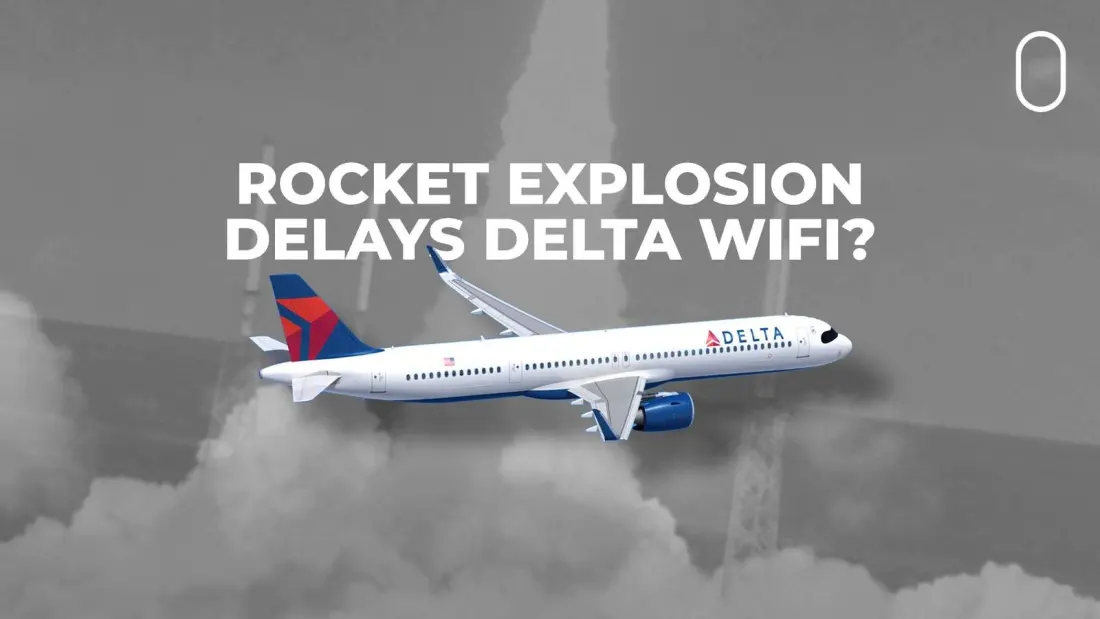
Delta Air Lines' push to get faster in-flight connectivity onto more of its fleet has run into a problem 300 miles above the Earth. In mid-November, a United Launch Alliance Vulcan rocket suffered what the company described as an 'anomaly' shortly after lifting off on November 15th. The failure destroyed the rocket's entire payload: 40 Amazon satellites destined for the retailer's Leo low-Earth-orbit internet network.
That matters to Delta because Amazon's Leo constellation is central to the airline's next-generation Wi-Fi ambitions. Delta has been working to upgrade connectivity across its aircraft, and low-Earth-orbit satellite networks promise the kind of low-latency, high-speed internet that older geostationary systems struggle to match — think video calls, streaming and general browsing at cruise altitude without the usual frustration.
Each lost satellite now has to be replaced, which means new builds, new launches and inevitable schedule slippage. For Delta, the timing is awkward: the rollout was already dependent on Amazon launching enough satellites fast enough to provide coverage, and any gap in the constellation delays the point at which the airline can switch aircraft over to the new system.
There's a broader irony here too. The aviation industry has been betting heavily on LEO satellite internet — SpaceX's Starlink already powers Wi-Fi on carriers including United, Hawaiian and several regional airlines, and Amazon's Leo was meant to be the main competitor. A single launch failure doesn't sink the technology, but it's a reminder that the whole upgrade cycle depends on rockets actually performing. Launch cadence, not consumer demand, is becoming the bottleneck for better cabin internet.
For travellers, the takeaway is patience. Delta's existing Wi-Fi keeps working in the meantime, and the airline hasn't announced a revised timeline. But if you were hoping for lightning-fast, free connectivity on Delta's domestic fleet in the near term, expect that promise to slip back by months rather than weeks. Meanwhile, competitors flying Starlink-equipped aircraft may pull further ahead while Amazon regroups — worth factoring in if in-flight internet genuinely shapes which airline you book.