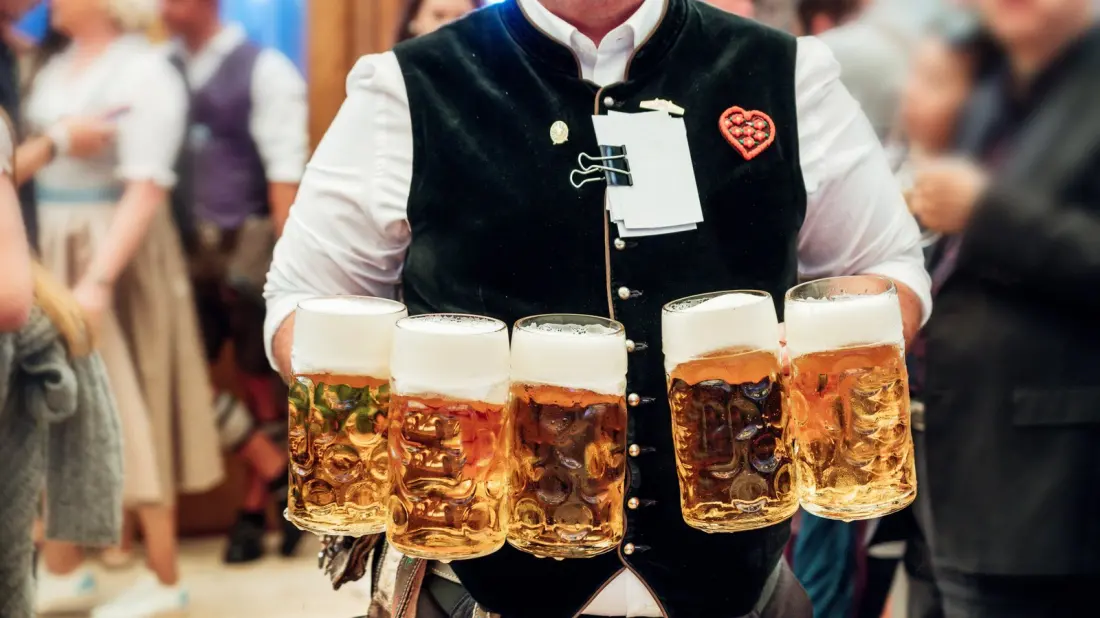
A new ranking of Europe's classic beer cities puts centuries-old brewing tradition front and centre, scoring a dozen destinations on historic and cultural impact, beer tourism, brewery numbers and accessibility. Unlike America's experimental craft scene, these are cities built on water, hops, barley and yeast — plus, in some cases, medieval monks.
At the bottom of the list, in 12th place, sits Amsterdam. Home to Heineken (the world's second-largest brewing group) and the popular Heineken Experience museum in its old brewery, the city makes up for what it lacks in a distinct beer style with its bruin café culture — cosy brown pubs best paired with a plate of bitterballen. Brouwerij 't IJ, in a bathhouse beneath a canalside windmill, might be Europe's most scenic brewery, but expensive city-centre prices keep it low.
London lands 11th. It invented porter, industrialised brewing in the 18th century, and has seen its brewery count explode from just 10 in 2007 to nearly 100 today, with the Bermondsey Beer Mile a standout hub. But scattered venues and steep pint prices hurt its case.
Germany's pair of Rhine rivals follow. Düsseldorf (10th) is all about Altbier, a copper-coloured top-fermented ale served in its Old Town's 260-odd bars — Uerige has brewed on the same spot since 1862 — with servers marking your beer mat to keep tab and refills arriving before you ask. Cologne (8th) answers with Kölsch, protected by the 1986 Kölsch Convention and poured in slim 6.7-ounce Stangen glasses at institutions like Früh am Dom and Päffgen until you cap your glass.
Dublin sneaks in at 9th, anchored by the Guinness Storehouse at St James's Gate — where Arthur signed his famous 9,000-year lease in 1759 — and its rooftop Gravity Bar. Traditional pubs like The Gravediggers and O'Donoghue's reward those who escape Temple Bar's steep prices.
Belgium takes 7th and 6th. Leuven, home to InBev and brewing since Den Hoorn was founded in 1366, lets you drink in the Oude Markt, nicknamed 'Europe's longest bar' for its 40-plus cafés. Bruges pairs a gorgeous medieval centre with De Halve Maan — complete with an underground beer pipeline to its bottling plant — plus a beer museum and a mid-September festival pouring hundreds of beers from around 60 breweries.
Plzeň, Czechia, rounds out the coverage in 5th with perhaps the strongest claim of all: it's where brewmaster Josef Groll created the original Pilsner Urquell in 1842, the ancestor of most lager on Earth. Tours run through historic cellars and underground storage tunnels, with a Brewery Museum nearby.
The rankings trim off at Plzeň in this list, but the pattern is clear: single-style, tradition-steeped cities beat sprawl and commerce. For travellers, that means a beer-focused European trip works best in compact cities — Düsseldorf, Cologne, Bruges, Plzeň — where the walk between brewhouses is short and the tap pour is part of the ritual. Anyone planning a hop-centric euro trip has a ready-made shortlist, and combining neighbouring rivals like Düsseldorf and Cologne makes an easy, rewarding weekend. — Islands