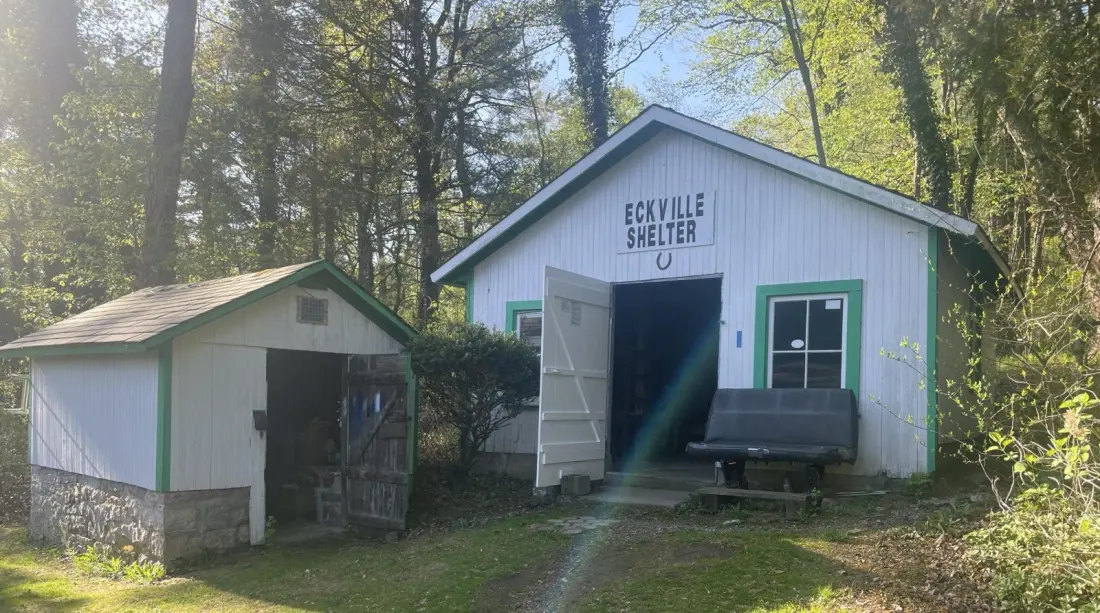
Two of the most unusual shelters on the Appalachian Trail could be gone by 2027, and the hiking community isn't taking it quietly. The US National Park Service plans to demolish 501 Shelter and Eckville Shelter, both on the trail's Pennsylvania stretch, and a local trail club has launched a campaign to stop it.
What makes these two buildings special is that they're nothing like the typical AT shelter. Most of the trail's 250-plus overnight shelters are open, three-sided wooden lean-tos. 501 and Eckville, by contrast, are fully enclosed buildings with electricity and running water, and both have long had volunteer caretakers living on site to help passing hikers. Eckville still operates that way — its current steward, Mick Charowsky, a former thru-hiker, has looked after the place for four decades. 501 was permanently closed last year ahead of the planned demolition, but it lives on in trail lore as the only backcountry shelter on the entire AT where hikers could order a pizza delivery.
The Park Service hasn't fixed an exact date but is reportedly aiming for late 2026 or early 2027. Its reasoning: the buildings don't meet safety standards, sit too close to roads, and conflict with a broader effort to return the trail corridor to a wilder state. The Appalachian Trail Conservancy supports the removal, pointing to guidance that overnight sites should sit at least two miles from road access to preserve a remote backcountry experience.
The Blue Mountain Eagle Climbing Club, which maintains the 65 miles of trail covering both shelters, disagrees. Its Save Our Shelters campaign argues the buildings offer genuine shelter in bad weather and reliable clean water — amenities the club says shouldn't be discarded. There's a practical gap, too: demolishing 501 leaves a 19-mile shelterless stretch between William Penn and Eagle's Nest shelters, and losing Eckville would add roughly 16 more miles with no roof between Windsor Furnace and the Allentown Hiking Club shelter. The campaign has started a petition and is urging hikers to contact the Park Service and elected officials.
For anyone hiking or section-walking the AT in Pennsylvania, this matters directly. Those long shelter gaps change daily mileage planning, especially for thru-hikers and less experienced walkers who rely on shelters in storms. There's also a small-town economy angle — hikers stopping at shelter amenity points spend money in nearby communities, as one thru-hiker blogger put it. Whether you side with the conservation purists or the preservationists, the outcome will shape what a night on this stretch of the trail looks like for decades.