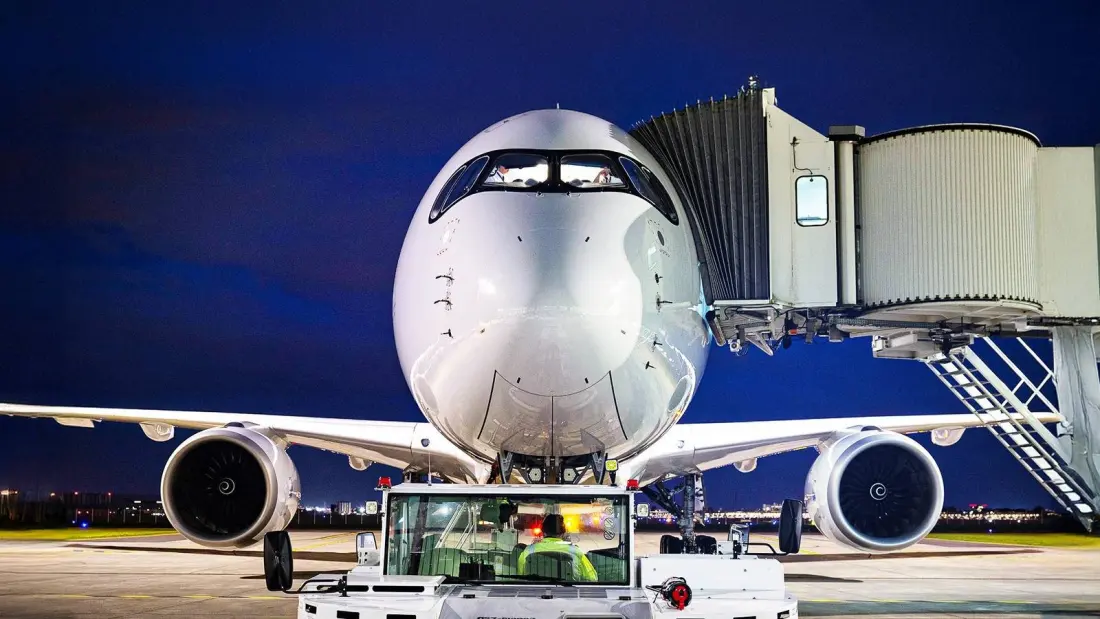
Ask pilots which aircraft they genuinely enjoy flying and a clear pattern emerges: the best cockpits are the ones that reduce workload and keep everyone more aware of what's happening. A recent roundup of the most technologically advanced aircraft highlights five standouts — the Gulfstream G700, Airbus A380, Lockheed Martin F-35, Airbus A350 and Boeing 787 Dreamliner — and several of them are jets holidaymakers board every day.
On the Airbus A380, the flight deck was the first fully paperless commercial design, with manuals, charts and performance data living on screens instead of in heavy binders. Eight large displays, sidesticks instead of a yoke, and live tail-fin and nose-gear cameras make taxiing a 500-tonne double-decker surprisingly manageable. Airbus's Normal Law automation even prevents the aircraft from being stalled — pull the stick fully back and the computer simply limits the climb to a safe angle.
The A350 takes a similar pilot-first approach with six displays, panoramic curved windows featuring a built-in 'sunglasses' glare reduction, and fold-out tables with integrated keyboards at each seat. Its safety logic treats pilot commands as requests that the computer verifies, blocking stalls and banks beyond 67 degrees, while the autopilot actively dampens turbulence — a nicer ride for everyone in the back, too.
Boeing's 787 Dreamliner counters with dual heads-up displays as standard, five 15-inch screens, and a fly-by-wire system praised for its intuitive feel. Its standout trick is RNP 0.1 navigation: the aircraft can hold its flight path within about 600 feet of centerline for 95% of the time, even cruising through GPS blackouts of up to 20 minutes. Boeing says that means point-to-point flying to any runway without ground navigation aids — useful for curved approaches around mountains and noise-sensitive areas, and often lower landing minimums in bad weather.
Private aviation gets a look in with the Gulfstream G700, whose Symmetry Flight Deck brings airliner-grade tech to a bizjet: linked active sidesticks so each pilot can feel the other's inputs, ten touchscreens, dual HUDs and a Combined Vision System that merges infrared camera feeds with a synthetic terrain view for near-superhuman visibility in cloud. Passengers benefit too — the cabin is pressurised to just 2,840 feet despite cruising up to 51,000 feet, with fresh air replacing the entire cabin volume every two to three minutes.
The odd one out is the F-35 Lightning II, which swaps conventional displays for a helmet-mounted virtual visor that projects flight data wherever the pilot looks — including 'through' the floor via six infrared cameras. Speech recognition lets pilots change radio frequencies by voice, and Major General-level praise from 10th Air Force commander Gina Sabric calls it the 'quarterback of the entire fight.'
Why does this matter if you're not a pilot? Because these systems shape your holiday. Smoother rides on turbulence-damping A350s and 787s, lower weather minimums on approach, and lower cabin altitudes that leave you less wrecked after a long-haul flight all trace back to flight deck design. Next time you book, it's worth checking which aircraft type operates your route — it can genuinely change how you feel when you land.