
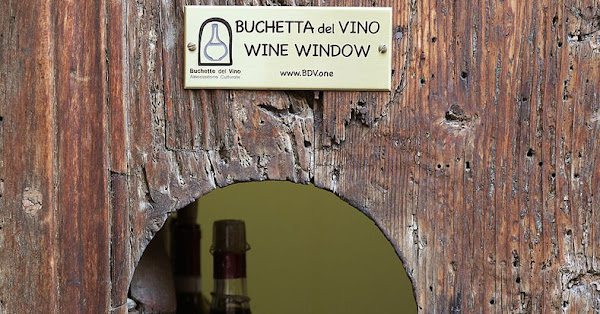
Look closely at the grand palaces lining Florence's narrow streets and you might spot something odd: a small arched opening, barely wide enough for a bottle, set into the stone at street level. These are the buchette del vino — Florence's famous wine windows — and most visitors walk straight past them without a second glance.
The story begins in the late Renaissance. In 1559, Grand Duke Cosimo I de' Medici issued regulations letting noble families with vineyards sell wine straight from their city residences, cutting out taverns and middlemen and dodging certain taxes along the way. Architecturally, the solution was elegant: oval or arched hatches built into the street-facing walls, just large enough to pass a flask through. A servant inside took the coins and handed over the wine, so customers never set foot in the palace and the aristocratic household kept its privacy.
What makes these windows genuinely fascinating is how useful they turned out to be during epidemics. Long after the Black Death, plague outbreaks kept hitting Europe, and Florence suffered several severe ones in the 17th century. A hatch that let buyer and seller trade without touching became an early form of contactless commerce — the 1600s equivalent of a delivery slot.
By the 19th and 20th centuries, modern wine shops and urban redevelopment had made the windows obsolete. Many were bricked up; others were quietly repurposed as doorbells, mailboxes or decorative niches. Then preservationists and historians started cataloguing them in the 2000s, and the pandemic gave the story a twist nobody expected: in 2020, with restaurants needing distance between staff and customers, a handful of bars and cafes reopened their historic wine windows — serving wine, coffee, cocktails and even gelato through openings that had done the same job during plague centuries earlier.
Today more than 150 surviving wine windows have been identified in Florence alone, with others scattered across Tuscany in towns like Pistoia and Siena. Only a small number still function as actual wine windows, but several do — so you can order a glass of Chianti handed through a wall that's been in the wine business since the Medicis.
For travellers, this is one of those details that turns a generic city break into something memorable. Hunting the windows is a free, self-guided activity that pulls you into backstreets you'd otherwise miss, past artisan workshops and quiet piazzas far from the Uffizi queues. A few cafes and bars have turned their windows into a genuine selling point, so you can literally drink from history. Keep your eyes low when you wander Florence — the best detail in the city might be at knee height.