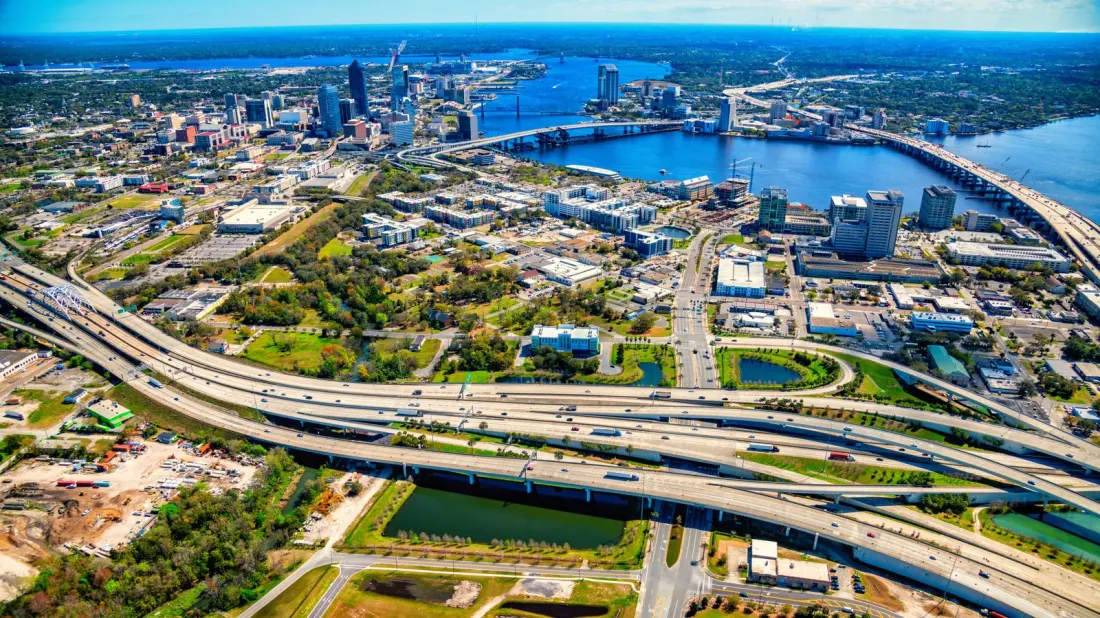
A Florida road trip promises a lot: the Overseas Highway down to Key West, the Gulf Coast beaches, the Sunshine Skyway Bridge arching over Tampa Bay. But the state also owns a less flattering record. In 2025 alone, Florida logged more than 367,000 crashes — roughly one every 44 seconds — and several of its highways rank among the deadliest in the country. If you're renting a car in the Sunshine State, it pays to know which stretches deserve extra caution.
U.S. 1, the famous route that starts in Key West and runs the length of the Eastern Seaboard, tops the list for the highest share of fatal crashes per driver. Heavy traffic around Miami, frequent intersections, missing medians and poor lighting all play a part; the highway has seen around 1,000 deaths over a decade. In the Miami and Fort Lauderdale area, local streets or the tolled Florida Turnpike are easier alternatives.
I-4, the 132-mile link between Tampa and Daytona Beach through Orlando, is considered by multiple studies the deadliest highway in America: 1.134 deaths per mile between 2016 and 2019. Around 200,000 vehicles use it daily, and the road itself needs work — potholes, sparse lighting and missing guardrails — while endless construction adds to the chaos. Staying in the right lane at or below the 70 mph limit helps, and SR 417 or SR 429 can bypass the worst of it.
Other trouble spots: U.S. 192 near Orlando and Lake Tohopekaliga ranks third nationally for deaths per mile, largely because it's packed with tourists unfamiliar with the route. I-75's "Alligator Alley" across the Everglades is so straight and empty that drivers zone out — keep an eye out for the gators sunbathing roadside, too. U.S. 19 along the Gulf Coast near Hudson has a serious pedestrian problem, with 112 pedestrian deaths in four years, so both drivers and walkers need to stay sharp there. And I-95 contains the single deadliest mile in the country: a sharp 90-degree turn near Marina Mile Boulevard by Fort Lauderdale airport, scene of 24 deaths in 19 years.
None of this means skip Florida's drives — the Keys, the coastal highways and the Everglades crossing are genuinely memorable. It just means driving them alert: watch your speed, avoid rush hour, use headlights in rain, and know your alternatives, especially the Turnpike if you're happy to pay tolls. A little route planning goes a long way on the roads where statistics say it matters most.