Philippine Airlines has a reputation problem and a paradox. In February 2026, data firm Cirium handed it the Asia-Pacific on-time performance award, yet one recent traveller's two-leg trip from Guam to Ho Chi Minh City via Manila arrived almost an hour late. The story of that trip says a lot about the flag carrier's strengths and its glaring weakness.
The inflight experience came out well. The Guam-Manila leg ran on a ten-year-old Airbus A321ceo with in-seat entertainment and a standard economy meal, and a generous 31-32 inches of seat pitch. The Manila-Ho Chi Minh City sector was better still: a newer A321neo delivered in 2018, fitted with 10.1-inch touchscreens and a movie selection in a 168-seat layout, plus complimentary wine in economy. No alcohol was visible on the Guam flight, but service and meals were otherwise solid for a mainline carrier.
Ground experiences were mixed. At Guam's empty pre-dawn check-in (the flight leaves around 4:30 AM), staff insisted on seeing an onward ticket - something the writer notes island-nation carriers like PAL and Cebu Pacific demand far more often than continental airlines. After some negotiation, they printed a liability waiver before letting him board without one.
Manila's Ninoy Aquino International Airport was the real letdown. Built for roughly 33-35 million passengers a year, it now handles over 52 million across a tangle of ageing terminals and a restrictive crossing-runway layout. Transit passengers funnel from security into a cramped international departure hall where cafes are packed and one of two WiFi networks barely functions (the other has a three-hour limit). A replacement airport is under construction and expected to open in 2028.
There was one final oddity: as a dual British-New Zealand national travelling on one ticket, the writer was called to the desk in Manila because his Vietnam visa exemption wasn't showing - PAL had his New Zealand passport in the system for the US leg, then switched him to the British one for Vietnam. Apparently a quirk of US departure tracking.
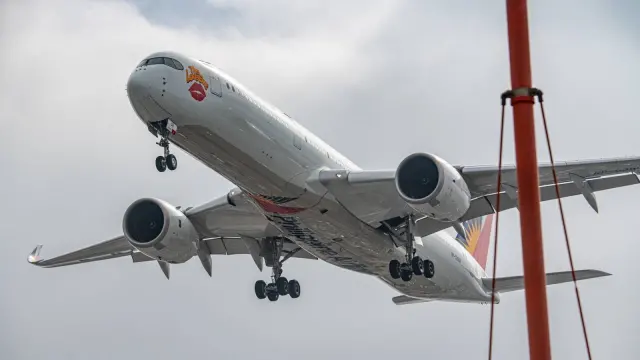
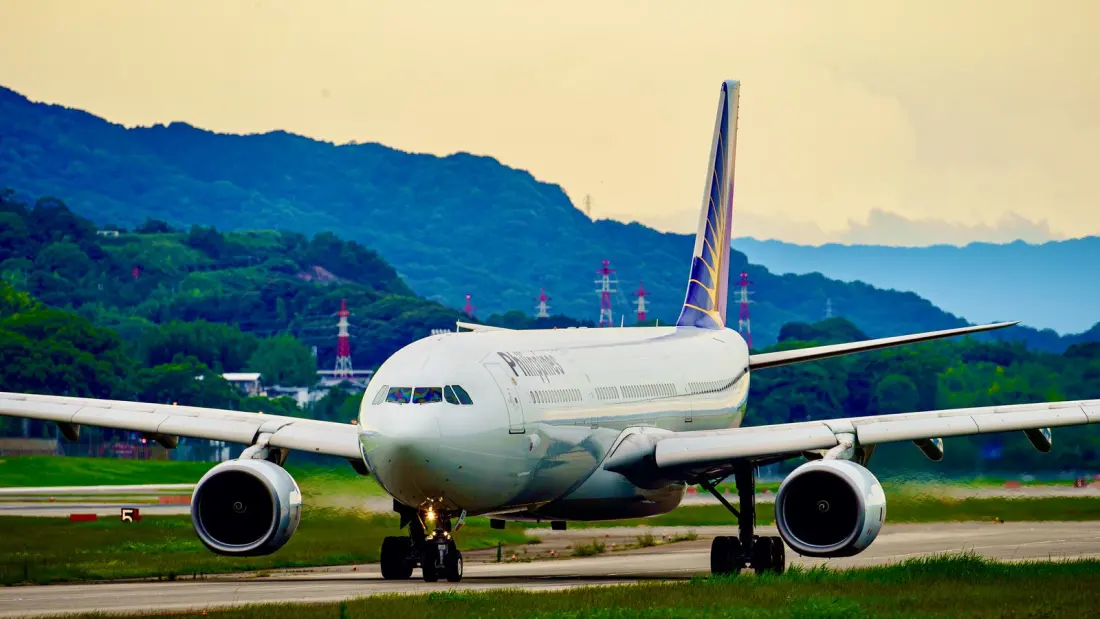
Fleet-watchers will find PAL interesting too. It runs 18 A321-200s, eight A321neos, 11 A330-300s, just two A350-900s (the rest were handed back during its COVID-era Chapter 11 restructuring), four A350-1000s and ten Boeing 777-300ERs, with big orders outstanding. Notably, it's the only full-service flag carrier to fit its new A350-1000s with ten-abreast economy seating - 316 economy seats in total - and it deploys them on flagship long-haul routes like Manila-New York, so expect snug seats on those flights.
The takeaway for travellers: Philippine Airlines is a perfectly decent way to fly, with better hard product than many rivals on regional routes. Just budget extra patience for a Manila connection, bring your own headphones and a downloaded entertainment backup, and carry proof of onward travel if you don't want to argue at check-in.