Feathers and street parties are the postcard version of Caribbean carnival. But dig a little deeper and the region's festivals are some of its most powerful cultural documents — many born from resistance, others as acts of memory. Here's a quick tour of the celebrations worth building a trip around.
**Grenada — Jab Jab (August)**
Before dawn on Carnival Monday, St George's turns dark and loud: masqueraders covered in oil, molasses or black paint, rattling chains and wearing devil horns. The word 'Jab' comes from a French patois slur for 'devil' — one colonisers used to demonise enslaved Africans, who reclaimed it in their own celebrations. Mas band leader Ian Charles calls J'ouvert morning a ritual where drums (once banned on plantations) and chains (once shackles) become symbols of freedom. Watch out for playful Jabs daubing bystanders with paint.
**Trinidad — Carnival (February)**
The biggest in the Caribbean, building from Boxing Day and exploding across the two days before Ash Wednesday with calypso, soca, masquerade and fêtes.
**The Bahamas — Junkanoo (December, January, July)**
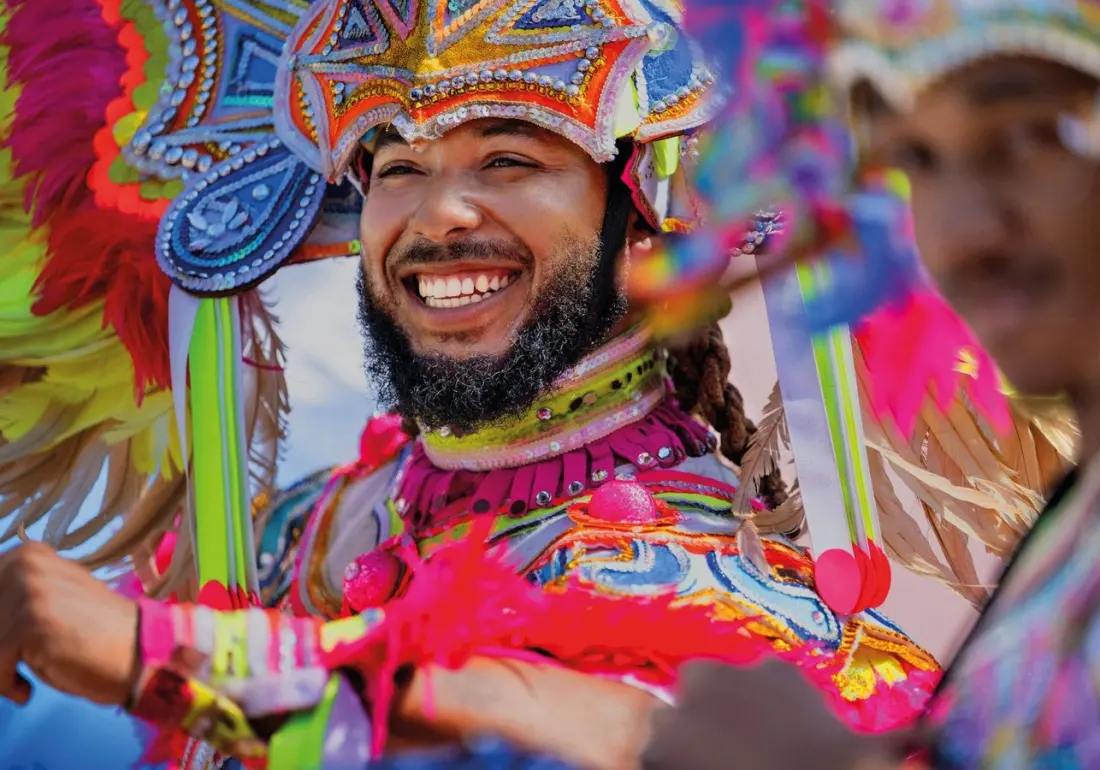
Said to date to the 18th century, when enslaved people got three days off around Christmas and built instruments and costumes from whatever they could find. Months of preparation go into cardboard and crêpe-paper designs; the main parade hits Nassau's Bay Street on Boxing Day, and repeats on New Year's Day and Independence Day (10 July).
**Montserrat — St Patrick's Festival (March)**
The only place outside Ireland where St Patrick's Day is a national holiday. Settled by Irish labourers and merchants from 1632, the island now blends African and Irish roots — plus its own tartan and a goat stew descended from Irish stew. The modern festival also honours an 1768 uprising planned for St Patrick's Day itself, and runs as a two-week party culminating on 17 March.
**Nevis — Culturama (July/August)**
Created in 1974 to rescue traditions fading after post-war emigration, it now doubles as a homecoming: calypso contests, folk dance, storytelling and a costumed parade through Charlestown. July also brings St Kitts & Nevis Culinary Month and Nevis' Mango Festival, with 44 local varieties.
**Also worth planning around:** Saint Lucia's month-long Creole Festival in October, culminating in Jounen Kwéyòl on the last Sunday; Jamaica's Accompong Maroon Festival on 6 January, honouring Captain Cudjoe and the 1739 Peace Treaty; the Anegada Lobster Festival in November, where shoreside grills fire up spiny lobster from Horseshoe Reef; and Anguilla's Festival Del Mar at Easter, with seafood, boat racing and soca on the sand in Island Harbour.
**Why go:** these aren't just parties — they're the region telling its own story, on its own terms. Time your trip to one and you'll get music, food and beaches plus a genuine lesson in history. Just book accommodation early: festival dates fill up fast.