Planning to self-drive on your next Dominican Republic holiday? A British-born resident who has spent over a decade driving everything from modern highways to rough mountain tracks has compiled the lessons he wishes every visitor knew — and most of them apply well beyond the island.
His core rule: drive as if everyone around you is trying to hit you. That doesn't mean local drivers are uniquely bad — he points out tourists and expats can be just as careless — it means anticipating problems instead of reacting to them. His first practical tip for intersections: don't accelerate the instant the light turns green. Drivers routinely squeeze through on late yellows and early reds, so check left and right before moving. And yes, stopping at red lights even on empty roads is both the law and the smart default.
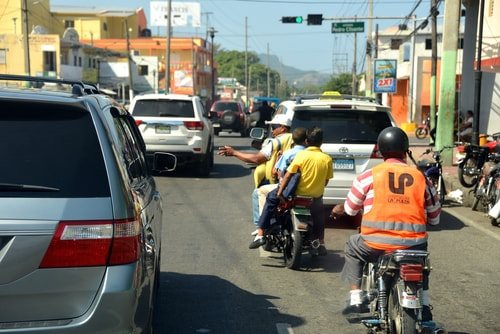
His other habits are equally transferable. Keep a buffer of space around your car — he calls it driving like a lone wolf — so you're never boxed into a pack of vehicles moving at different speeds. Watch your blind spots religiously: motorcycles are everywhere in the Dominican Republic as cheap, practical daily transport, and they appear beside you faster than you'd expect, especially on the right. Position your vehicle deliberately within the lane, keeping distance from oncoming traffic without drifting so far right that you hit potholes, drainage ditches or pedestrians. And above all, slow down — a motorcycle pulling out, a car stopping suddenly, or a pothole hidden in tree shade are all routine hazards that become manageable at a reasonable speed.
There's a vehicle-maintenance angle too. Heat, humidity and rough surfaces wear down batteries and tyres faster than most visitors expect. Tyre shops known as gomerías repair punctures cheaply all over the country — the author mentions David Tire in Sosúa as an example. His advice: test your battery periodically, never drive on bald or damaged tyres, and consider a dashcam that records front and rear as your best witness in any accident or dispute over a traffic stop.
Legally, Dominican Law 63-17 requires a valid licence and insurance. Tourists should confirm their foreign licence covers their situation; residents can convert through INTRANT, the transport authority. Carry your licence, registration (matrícula), insurance proof and a current vehicle tax sticker (marbete), and note that minimum insurance may not cover much after a serious crash. One more rule aimed squarely at visitors: skip the road rage. Traffic norms differ from home, you're a guest, and confrontation over right of way can escalate fast. Let it go and move on.
Why does this matter for travellers? All-inclusive resort holidays rarely involve driving, but the country rewards road trips — the Samaná Peninsula, Jarabacoa's mountains, the north coast around Puerto Plata and Sosúa. Renting a car is the best way to see them, and these habits dramatically cut your risk. The author's closing caveat is honest: he's still had accidents despite years of defensive driving. It doesn't make you invincible — it just stacks the odds in your favour.
Story via Dominican Today.