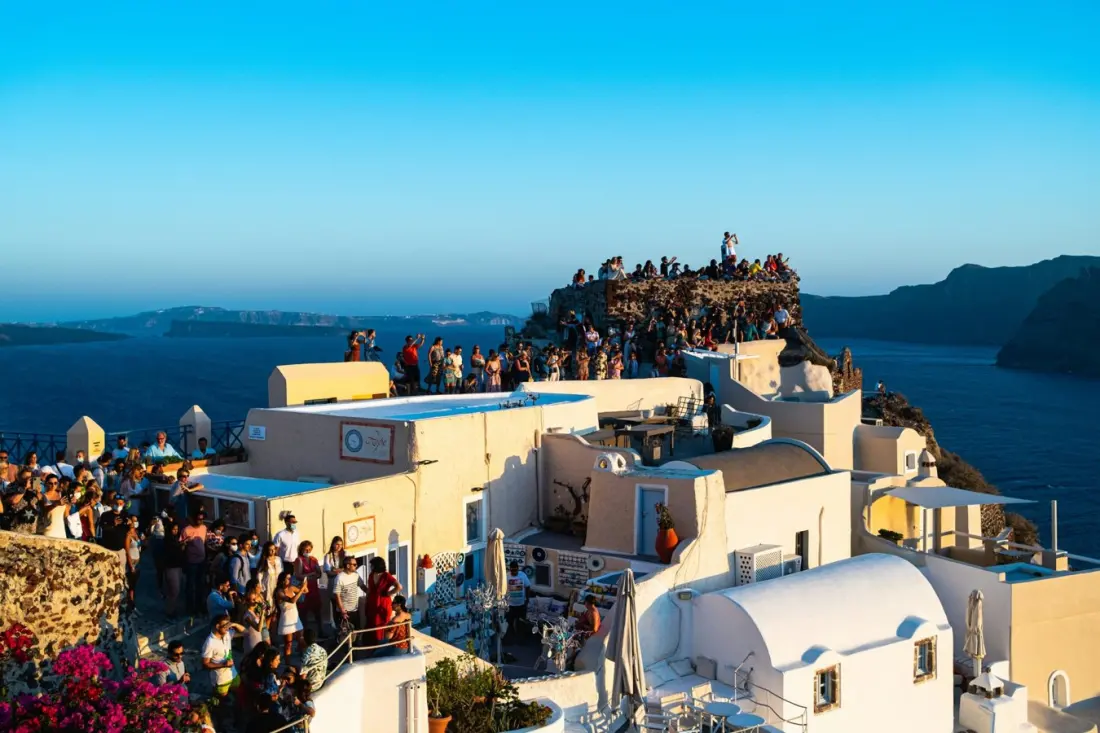
Greece is having a bumper year. Provisional Bank of Greece data shows 20.43 million international arrivals between January and July 2026 — up 8.6% on the same stretch of 2025 — with travel receipts climbing even faster, 12%, to €13.5 billion. Both figures are records for the seven-month period.
Spending is rising from every direction. EU visitors generated €7.09 billion (up 6.9%), while non-EU travellers spent €5.78 billion, a jump of 18.3%. By market, the UK led with €2.09 billion in receipts, up 23.3%, followed by Germany at €1.98 billion (down slightly) and the US at €1.06 billion. Italy was the standout performer, with revenue from Italian holidaymakers surging 31.6% to €828.1 million. Arrivals grew too: 3.03 million Germans, 2.27 million Brits, 1.20 million Italians and 910,500 Americans visited in the first seven months.
July itself tells a subtler story. Arrivals dipped 3.1% year-on-year to 6.55 million, yet receipts still rose 7.2% to €4.72 billion. The reason? Visitors are spending about 10% more per trip — fewer people, but bigger budgets. Separate ELSTAT figures show hotels, campsites and short-stay rentals recorded 31.7 million overnight stays in July, with foreigners making up the bulk of both arrivals (80.3%) and nights (87.6%).
The momentum isn't limited to summer. The first half of the year already brought 13.49 million arrivals and €8.8 billion in receipts, up more than 14% on both counts. And demand looks set to stretch well past the beach season: a Greek National Tourism Organization survey found 29% of Europeans plan to visit Greece by May 2027, and roughly a third of those planning a trip are eyeing September to November 2026 — good news for anyone who prefers the islands without the August crush.
For travellers, the takeaway is twofold. Greece is busier and pricier at the peak than ever, so shoulder-season trips look increasingly attractive, with the tourism board itself expecting a strong autumn. And the spending boom suggests hotels and tavernas are betting on higher-value visitors — booking early, or travelling outside July and August, is the easiest way to keep costs sane.