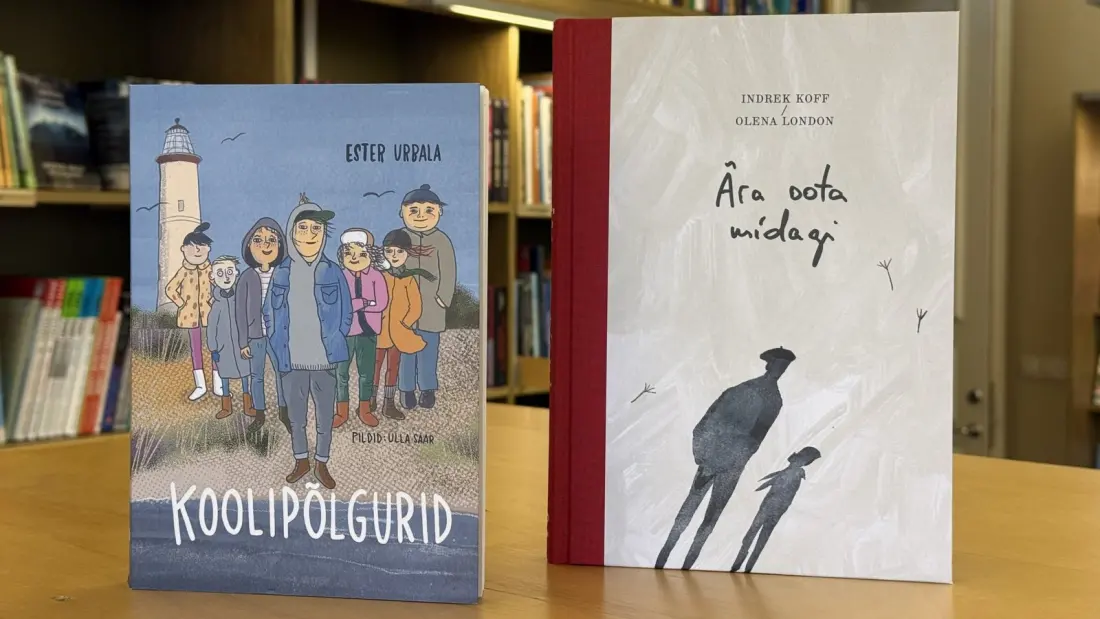
A graphic novel about growing up in Soviet-occupied Estonia and a debut story about seven kids abandoned (politely) on an island are the two Estonian titles picked for The White Ravens 2026, the annual catalogue of standout children's and young adult literature compiled by the International Youth Library in Munich. This year's edition gathers 216 books in 46 languages from 62 countries and territories, chosen by experts for literary quality, artwork and appeal beyond national borders.
The first pick is Ära oota midagi (Don't Expect Anything), written by Indrek Koff with illustrations by Olena London, published by Varrak in 2025. Koff's graphic novel reaches back to his own childhood, weaving memories of his grandfather through scenes of school days, Young Pioneer meetings and teenage years. The storytelling is deliberately fragmentary, sketching a life hemmed in by control and repression, with London's bold illustrations doing much of the emotional lifting. Koff, clearly pleased, joked that a white raven beats a place on a black sheep list and said he and London are already plotting their next collaboration.
The second is Koolipõlgurid by Ester Urbala, illustrated by Ulla Saar and published by Puänt, also in 2025. Urbala's premise is the kind kids fantasise about: seven schoolchildren sent to an island for a six-month experiment with no compulsory schooling. Survival, sleeping arrangements and the washing-up rota all need sorting, and the book charts how they build their own small society with a good dose of mischief. It's her first children's novel, and she says the selection shows a story rooted in Estonia can travel across linguistic and cultural borders.
Why should a traveller care? Because the children's books a country exports say a lot about the place itself. Estonia punches far above its weight in illustration and design, and Tallinn's bookshops — Rahva Raamat, Apollo — are an easy, low-cost way to bring home something genuinely local. Saar's illustrations alone make a lovely souvenir, and Koff's book doubles as an accessible entry point to the Soviet-era experience that still shapes Estonian memory, alongside sites like the Vabamu Museum of Occupations and Freedom in the capital.
The White Ravens list matters in practice, too: publishers, translators and librarians across the world use it to decide which titles get translated, so these two books are likely to appear in English and other editions in the next few years. If you're travelling to Estonia before then, hunting down a copy in its original language — or simply browsing the picture-book sections in Tallinn or Tartu, a UNESCO City of Literature — is a worthwhile detour for anyone travelling with children or just curious about how Estonians tell their stories.