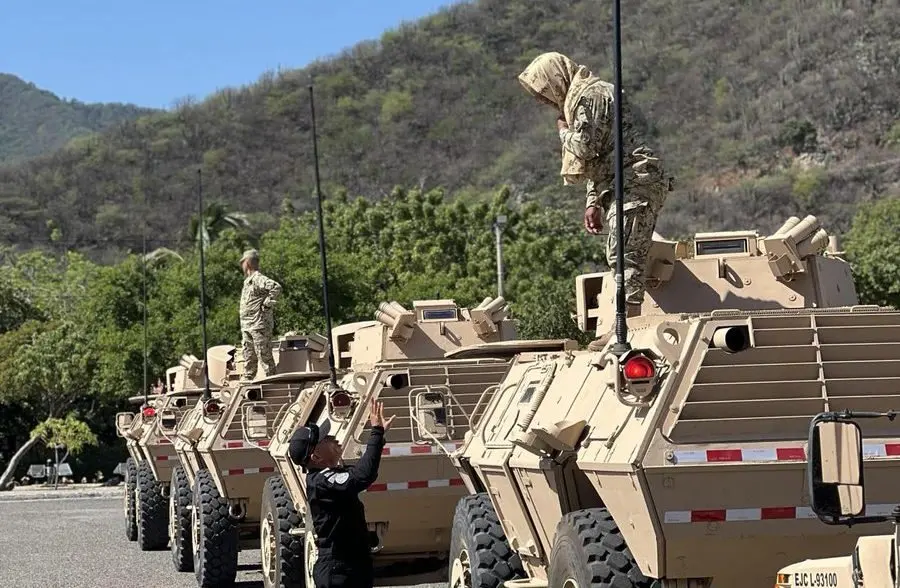
Santa Marta, one of Colombia's oldest cities and a popular base for Caribbean coast travel, spent Wednesday under heavy military and police protection after the armed group Los Pachenca brought daily life to a halt. Authorities deployed more than 500 soldiers and 600 police officers across the city, nearby Ciénaga and the Troncal del Caribe highway, with Air Force Kfir jets also involved in the government response.
The unrest stems from Monday's killing of José Luis Pérez Villanueva, alias "Cholo", second-in-command of the Autodefensas Conquistadoras de la Sierra Nevada, during a joint operation by anti-narcotics police, prosecutors and the Air Force near Guachaca. Seven alleged members of the group died in total. In retaliation, Los Pachenca declared a 48-hour "paro armado" — an armed strike enforced through intimidation rather than organised labour action.
The effects were immediate and visible. Masked men on motorcycles ordered shops to shut in several neighbourhoods, and gunfire was reported outside businesses in Cristo Rey, Gaira and Los Olivos. Commerce stopped around Carreras 5 and 6 and the public market. Public buses vanished from the streets after drivers were threatened, with passengers reportedly ordered off vehicles in El Yucal and El Cisne. A tractor-trailer and a taxi were set on fire, and freight trucks came under attack on the highway and in the Zona Bananera.
By Wednesday, nine suspects had been detained and four alleged group leaders — including Fredy Castillo Carrillo, alias "Pinocho" — named as priority targets. Officials said main roads had reopened and a temporary motorcycle ban was lifted at 6 AM, though traffic stayed thin and many businesses remained shut. No curfew was imposed.
For travellers, the practical picture is this: Santa Marta is the gateway to Tayrona National Park, Minca and the Lost City trek, so plenty of visitors pass through even if the city itself is a short stop. Armed strikes are a known tactic of Colombian illegal armed groups and typically last a day or two, aimed at local populations rather than tourists specifically. That said, the disruption directly affects the routes travellers use — the coastal highway between Santa Marta, Barranquilla and Palomino, and transport to the airport and park entrances.
If you're booked into the region in the coming days, keep plans flexible. Check with your accommodation before travelling overland, expect possible bus and taxi shortages, and follow local news or your embassy's updates. Foreign offices generally advise against overland travel during an active armed strike. Events like this are usually short-lived and highly localised, but they're a reminder that Colombia's Caribbean coast, however popular, still has areas where armed groups operate.
Story reported by The Bogotá Post.