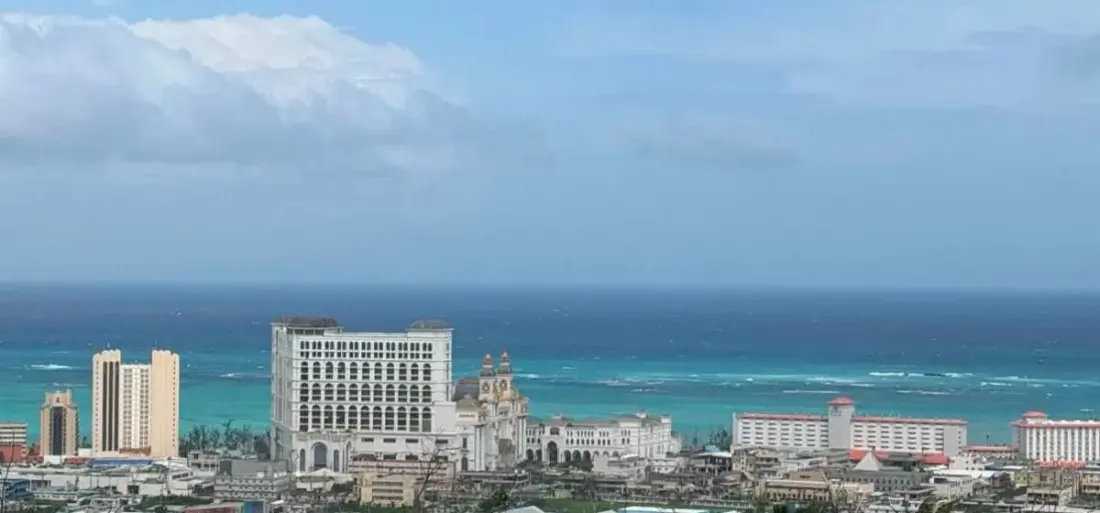
Guam and the Northern Marianas have had a rough 2026, and forecasters say the pain isn't over yet. Five typhoons have hammered the US territories since April, causing an estimated US$1.5 billion in damage from the two worst storms alone — and now a strengthening El Niño is raising the spectre of a long drought.
The US Climate Prediction Centre expects a strong to very strong El Niño to persist until March 2027, which would make it one of the most powerful events since 1950. According to the US Geological Survey, the worst drought impacts on Guam and Saipan historically land in the year after El Niño kicks off, so the islands may be facing months of water stress ahead. The National Weather Service reported on November 18 that dry conditions are already developing and Guam's fire danger has climbed into the high category as vegetation dries out.
The backstory explains why this matters so much. Super Typhoon Sinlaku slammed into Saipan on April 14 with 150mph winds, damaging homes, flooding the hospital and knocking out power and water. Then Super Typhoon Bavi hit Rota on July 6 with winds of 180mph — mayor Aubry Hocog said the island was damaged in "every aspect", with most homes affected and roughly 2,000 residents left without electricity or running water. Water catchment systems, which many households rely on, are low or empty in places, and residents have been told to harvest rainwater during showers whenever they can.
There are a few other twists in the forecast. Meteorologist Marcus Landon Aydlett warned that the risk of late-season tropical cyclones stays elevated through the end of the year. El Niño can also push sea levels down around the region — usually good news for low-lying islands, but here it raises the risk of coral bleaching on Guam's reefs, which are a big part of the islands' appeal for divers and snorkellers.
So should travellers steer clear? Not necessarily, but timing and flexibility matter more than usual. If you're planning a trip to Guam, Saipan, Tinian or Rota in the coming months, expect drier, browner scenery, possible water restrictions, and a small but real chance of a late-season storm. Check accommodation cancellation policies, keep an eye on advisories from the National Weather Service in Guam, and consider travel insurance that covers cyclone disruption. The islands remain open for business and tourism dollars genuinely help communities still rebuilding — just pack patience along with the sunscreen.
The Climate Prediction Centre's next El Niño update is due on December 10, and it should give a clearer picture of how long and severe the dry spell might get. For anyone with a Micronesia trip on the horizon, that's a date worth diarising.