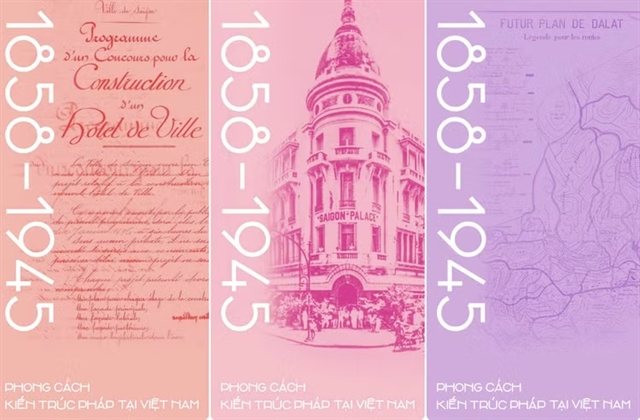
A new archive-based exhibition opening in Hà Nội this month maps nearly a century of French building in Việt Nam — and it doubles as a free history lesson for anyone who has ever wondered why Saigon has a Notre-Dame and Đà Lạt looks vaguely Alpine.
"French Architectural Styles in Việt Nam, 1858–1945, Through Archival Documents" opens on November 23 at the State Records and Archives Department in Hà Nội, timed to Việt Nam Cultural Heritage Day (November 23) and Việt Nam Culture Day (November 24). It is co-organised with the French Embassy in Việt Nam, with backing from AA Corporation, universities and researchers.
The material on show comes from Việt Nam's National Archives Centres and France's Overseas National Archives: original maps, architectural drawings, photographs and documents spanning the colonial period from 1858 to 1945. The displays focus on five cities where French urban planning left the deepest marks — Hà Nội, Hải Phòng, Huế, Đà Lạt and Hồ Chí Minh City.
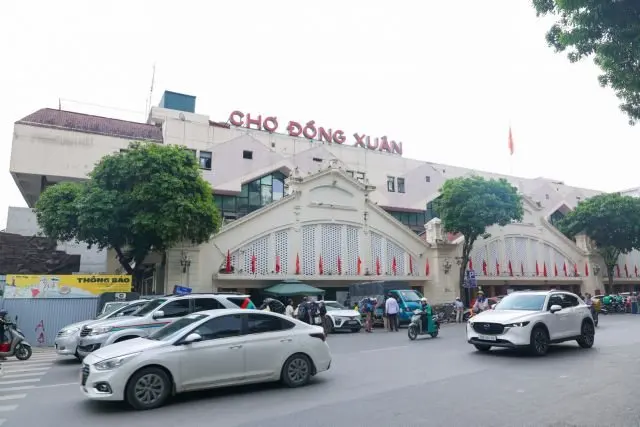
What makes the show interesting for travellers is its framing. Rather than treating colonial buildings as a stylistic curiosity, the curators look at how French architecture adapted to Việt Nam's climate, terrain and local culture — the shutters, high ceilings and verandas that make Hà Nội's villas and HCM City's landmarks recognisably tropical. That context makes a walk through the Hà Nội Old Quarter or around Đà Lạt's hillside villas far more rewarding once you know the logic behind them.
There's more than paper, too. Several educational institutions are lending architectural models, and visitors can browse specialised research publications and meet architects and urban planners on site.
The exhibition also serves a bigger purpose: Việt Nam is pushing for UNESCO recognition of its French architectural archive collection through the Memory of the World Register. The show is part of the case that these records deserve international heritage status — which means this could be a rare chance to see documents that may soon carry a global badge.
Why it matters for visitors: if you're in Hà Nội in late November, this is an easy add-on to a day of sightseeing and gives you a mental map of the colonial-era buildings you'll keep spotting elsewhere in the country — the Opera Houses, post offices and boulevards of Saigon, the lakeside villas of the capital, the pseudo-European resort town of Đà Lạt and the port-city facades of Hải Phòng. For architecture lovers and slow travellers, it's a rare public window into original drawings and maps usually locked away in archives on two continents.