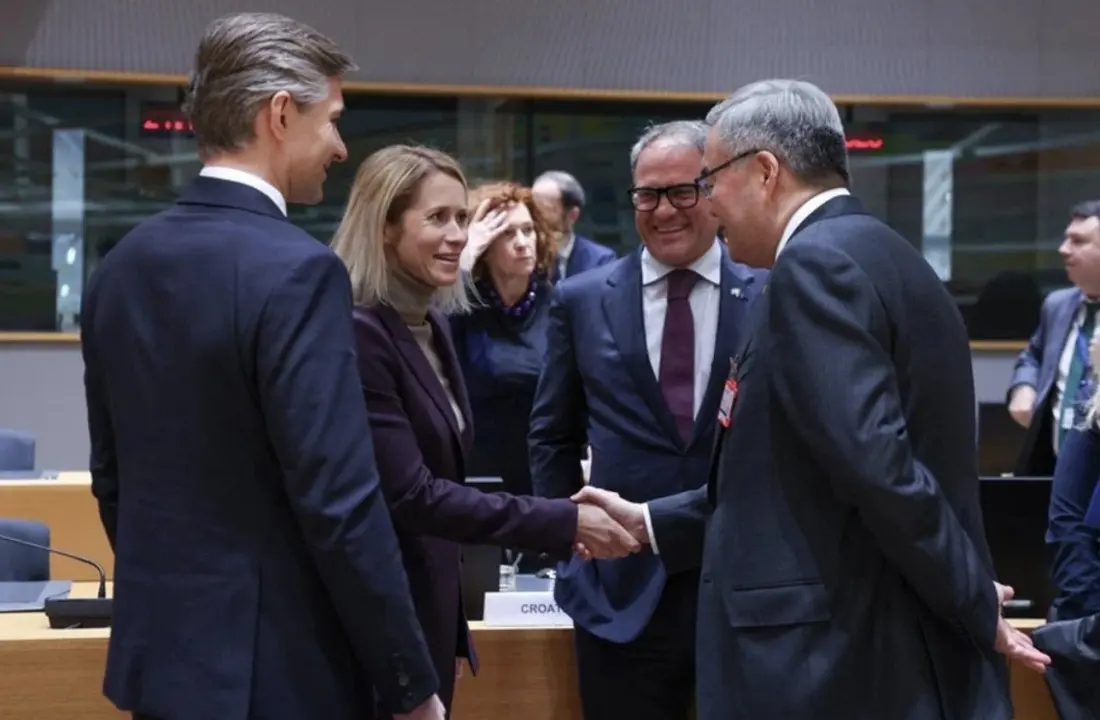
At a ministerial gathering in Brussels on November 16, Kazakhstan and the European Union sat down to talk freight, energy and infrastructure - and while the conversation was framed in trade language, the route at its centre is one that adventurous travellers are already starting to use.
The Second Ministerial Meeting on Interregional Connectivity brought together foreign ministers from EU member states, the Black Sea region, the South Caucasus and Central Asia, plus European Commission officials. Kazakhstan's Foreign Minister Mukhtar Tileuberdi used the platform to pitch his country's transit ambitions, framing infrastructure modernisation as a strategic priority under President Kassym-Jomart Tokayev.
The star of the show was the Trans-Caspian International Transport Route, better known as the Middle Corridor - the chain of rail and sea links that runs from Central Asia across the Caspian Sea, through Azerbaijan and Georgia, and on into Europe, bypassing Russia entirely. Tileuberdi called it a key link between Europe and Asia and pushed for simpler logistics procedures and a more resilient transport network. Kazakhstan is also courting investment through the EU's Global Gateway initiative, which funds infrastructure projects in partner countries.
Energy got a look-in too, with discussion of cross-border renewables and regional energy security, but the headline for anyone who moves around the region is connectivity. Every agreement to harmonise procedures, upgrade rail lines and smooth border crossings makes the old Silk Road overland route - trains from Almaty to the Caspian, ferries to Baku, onward rail through Tbilisi to the Black Sea - a little more practical.
That matters because this corridor is one of the few genuinely epic overland journeys still open between Europe and Asia. Right now it demands patience: Caspian ferry crossings run on irregular schedules, and rolling-border paperwork can eat up days. But with the EU and Kazakhstan throwing diplomatic weight and money at the route, travellers can realistically expect steadier sailings, better rolling stock and faster crossings over the coming years. If you've been putting off a Central Asia-to-Europe trip because it looked too complicated, watch this space.