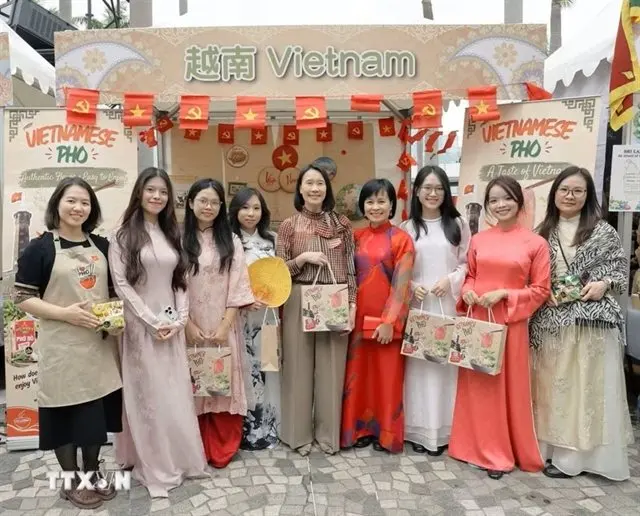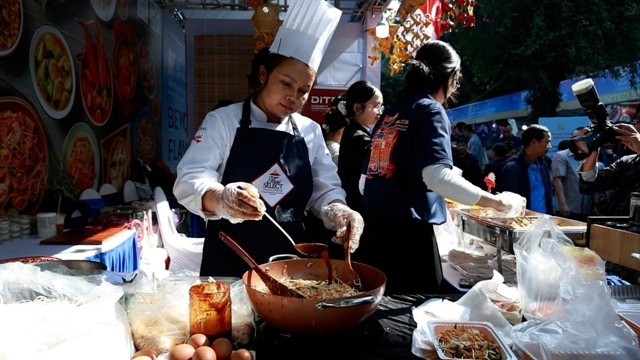
Hà Nội has long argued that it's one of Asia's great eating cities, but for a few days the Vietnamese capital flipped the script: instead of showing visitors Vietnamese food, it brought the world's food to them. An international food festival held in the city gathered cuisines from across the globe in one place, built around a simple idea — that a plate of food can do the work of a passport.
The event framed food as more than flavour. Organisers and participants positioned it as a gateway to culture and tradition, a way for people who may never visit each other's countries to still connect over a shared meal. Festival-goers could sample dishes from a range of countries, chat with the cooks and vendors behind them, and pick up a bit of context about where each dish comes from and how it's eaten at home.
That might sound like standard festival marketing, but it lands differently in Hà Nội. This is a city where street food is the main event — where locals perch on plastic stools over bowls of phở bò at dawn and grill pork skewers on the pavement by evening. A festival that treats food as cultural diplomacy fits naturally into a place that already eats this way, out loud, in public, three times a day.
For travellers, the practical takeaway is timing. International food festivals like this tend to pack an enormous range of eating into a compact, walkable space — a rare chance to taste, say, European, Middle Eastern and Asian dishes within an hour, then step out of the festival gates and into a bia hơi joint for fresh beer and grilled squid. If you're planning a Hà Nội trip, it's worth checking the city's event calendar before booking; aligning your dates with a food festival gives you a second, contrasting layer to the city's own cuisine rather than an either/or choice.
The festival also reflects something bigger about Vietnamese tourism right now. Hà Nội has been leaning into food as a headline attraction, and international events like this one help position the city as a place where travellers can do culinary double duty — deep-dive into Vietnamese classics like bún chả and bánh cuốn, then use the city as a jumping-off point for flavours from everywhere else. Food, in this framing, isn't a side activity; it's the reason to book the flight.
Who should care? Anyone who plans trips around meals. If you're the sort of traveller who researches restaurants before hotels, a food festival in one of Southeast Asia's most respected food cities is an easy sell. Come hungry, arrive with an open schedule, and let the stalls decide your itinerary. And when the festival's over, the old quarter's street-food scene — the real permanent exhibition — is waiting a short walk away.